By Claire Whitaker
Updated November 2026
East-west roof solar panels split their output between morning and afternoon, which suits a roof with one slope facing east and the other facing west. Choosing the right panels for that layout means checking efficiency, bifacial performance, panel size, and whether the mounting hardware fits your roof type. The picks below were selected by reviewing manufacturer specifications, product listings, and common owner feedback patterns. This is not based on our own testing.
Our top picks at a glance
- 1
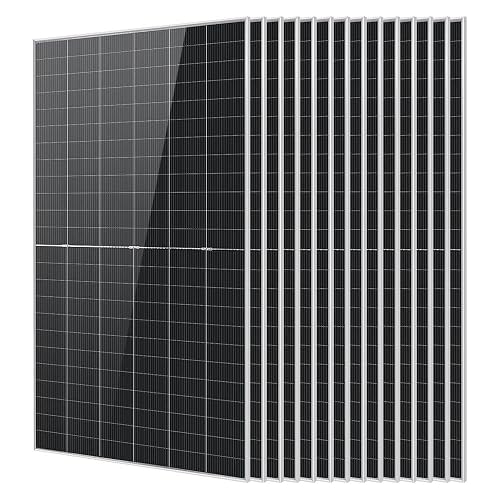 TOP CHOICEBest overallSUNGOLDPOWER UL61730 N-type 14PCS 590W Bifacial Solar PanelsView on Amazon
- 2
 TOP CHOICEBest for high-wattage whole-home systems450W Bifacial Solar Panel 2-Pack (900W Total)View on Amazon
- 3
 TOP CHOICEBest for 12V and 24V battery systemsN-Type 16BB 400W Bifacial Solar Panel, 2Pcs 200 Watt Solar PanelView on Amazon
- 4
 Best for metal roofsAluminum Waterproof Complete Solar Panel Mounting KitView on Amazon
- 5
 Best for compact mounting on 4 panelsSolar Panel Mounting Kit For 4 PanelsView on Amazon
- 6
 Best for curved or flexible roofs2.5mm PET panel for curved roofs, 21.9% cell efficiency, IP67, 6.94 lbView on Amazon
- 7
 Best for asphalt shingle roofsSolar Flashing Mount, Aluminum L Bracket, Waterproof Pv Module Roof RaView on Amazon
Our Top Picks
| Product | Best for | Key feature |
|---|---|---|
| SUNGOLDPOWER 590W Bifacial 14-Pack | Best overall | 590W, 16BB cells |
| 450W Bifacial 2-Pack (900W Total) | High-wattage whole-home systems | Anti-shade parallel design |
| N-Type 16BB 400W Bifacial 2-Pack | 12V and 24V battery systems | 25.6% stated efficiency |
| Aluminum Waterproof Mounting Kit | Metal roofs | Weather-resistant rails |
| Solar Panel Mounting Kit for 4 Panels | Compact 4-panel installs | Rails, clamps, wrench included |
| 200W Flexible Solar Panel | Curved or flexible roofs | IP67, lightweight PET |
| Solar Flashing Mount L Bracket 8-Pack | Asphalt shingle roofs | EPDM gasket hardware |
SUNGOLDPOWER UL61730 N-type 14PCS 590W Bifacial Solar Panels
SUNGOLDPOWER UL61730 N-type 14PCS 590W Bifacial Solar Panels,16BB High Efficiency Monocrystalline Solar panel for Energy Storage,Charging Station, Household,On/Off Grid Solar System (14x590W Bifacial)
Best for: Best overall
This 14-panel set suits homeowners building a larger system who want high wattage per panel and a bifacial design that can capture some reflected light.
Pros
- High 590W rating per module
- 16BB cell layout listed for efficiency
Cons
- Large panels need a sturdy roof and careful handling
450W Bifacial Solar Panel 2-Pack (900W Total)
450W Bifacial Solar Panel 2-Pack (900W Total), N-Type 16BB Monocrystalline, Double-Glass, Dual-Module Parallel Anti-Shade Design, 25.6% Efficiency, for Home Rooftops, RVs, Off-Grid Systems
Best for: High-wattage whole-home systems
Homeowners who want fewer, larger panels on an east-west layout often look at this double-glass option with a parallel anti-shade design.
Pros
- Double-glass construction listed for durability
- Anti-shade parallel design reduces losses from partial shading
Cons
- Heavier than smaller modules, so check rafter capacity
N-Type 16BB 400W Bifacial Solar Panel, 2Pcs 200 Watt Solar Panel
N-Type 16BB 400W Bifacial Solar Panel, 2Pcs 200 Watt Solar Panel for 12V/24V Systems, 25.6% High Efficiency, Dual-Module Parallel Anti-Shade Design, for RV Van Marine Home Rooftop Off-Grid
Best for: 12V and 24V battery systems
This pair fits homeowners running off-grid or battery-backed systems who need compatibility with common low-voltage setups.
Pros
- Listed for both 12V and 24V systems
- Dual-module parallel design for shade tolerance
Cons
- Low-voltage systems require thicker wiring over longer runs
Aluminum Waterproof Complete Solar Panel Mounting Kit
Aluminum, Waterproof, Complete Solar Panel Mounting Kit, Weather Resistant, For Metal Roof Tin Roof Flat Roof Sheet Roof Solar Panel Roof Mounting Kit for 4-5 Solar Panels, 8 x 47.2 in Rails
Best for: Metal roofs
Owners with standing-seam or corrugated metal roofs often need clamps and rails designed for that profile rather than generic hardware.
Pros
- Aluminum rails listed as weather resistant
- Kit sized for 4–5 panels on east-west rows
Cons
- Clamp fit depends on the exact seam profile of your roof
Solar Panel Mounting Kit For 4 Panels
Solar Panel Mounting Kit For 4 Panels, Included 10 X 4.72 In Rails+4 End Clamps+6 Center Clamps+1 Wrench, For Roof, RV, Boat Solar Panel Mounting Brackets For Roof, Aluminum Solar Rails, Black
Best for: Compact 4-panel installs
This kit suits smaller east-west arrays where a single two-rail layout keeps the install simple.
Pros
- Includes rails, end clamps, center clamps and a wrench
- Black finish for a lower-profile look
Cons
- Limited to four panels per kit
Buying Guide
Panel efficiency and cell type
Efficiency tells you how much sunlight a panel converts into electricity. For east-west roofs, where each slope gets less direct sun than a south-facing roof, higher-efficiency panels such as N-type cells help you recover more output from a limited roof area.
Look for listings that state cell type and efficiency clearly, since these details affect how much power you get per square foot of roof.
Bifacial design
Bifacial panels capture light on both the front and back of the module. On east-west roofs, reflected light from the roof surface or ground can add some extra generation, especially in the morning and late afternoon when the sun is low.
Check whether the panel is double-glass, since that construction is often used with bifacial designs and tends to be more durable over time.
Panel size and wattage per module
Fewer, higher-wattage panels take up less space and make installation simpler, but they are heavier and can be harder to handle. Smaller, lower-wattage panels are easier to lift and can fit awkward roof sections more neatly.
Measure your usable roof area on both slopes before you decide, and compare the total wattage you need against the space you have.
Mounting compatibility with your roof type
Mounting hardware has to match your roof surface. Asphalt shingle, metal, tin, and flat roofs each call for different flashings, feet, or rail systems, and using the wrong type can lead to leaks or weak attachment.
Confirm the kit lists your roof type and includes the rails, clamps, and gaskets you need. Check the rail length too, so it spans the panel width correctly.
Off-grid, RV, or grid-tied use
Some panels suit permanent home rooftop systems, while others are built for RVs, vans, boats, or battery-based setups. Flexible or semi-flexible panels work well on curved surfaces but usually have different mounting needs than rigid panels.
Think about how the panels will connect to your inverter or battery bank and whether the output connectors match your system.
FAQ
Are east-west roof solar panels worth it?
East-west layouts spread production across the morning and afternoon, which can smooth out the daily power curve and help match household use. They often produce less total energy than a south-facing array, but many homeowners find the trade-off worthwhile for their roof and usage pattern.
Do bifacial panels really help on an east-west roof?
Bifacial panels can capture some reflected light on their rear side, which may add a little output on east-west roofs. The actual gain depends on roof color, mounting height, and local conditions, so it is a possible benefit rather than a guaranteed one.
Can I mount these panels on a metal or flat roof?
Many mounting kits are designed for metal, tin, or flat roofs, but you need to confirm that the specific kit matches your roof type. Flat roofs usually need ballasted or tilted racking, while metal roofs often need clamps or standing-seam attachments.
Do I need a professional to install a rooftop solar system?
Installing panels on a roof involves electrical work, structural attachment, and sometimes permits. Many homeowners hire a licensed installer to confirm the roof can support the load and that the wiring meets local code.
What size system should I choose for my home?
The right size depends on your monthly electricity use, available roof area, and whether you plan to add batteries. Reviewing your past utility bills and measuring both roof slopes will give you a practical starting point for comparing the options above.
Conclusion
For homeowners who want a higher-capacity rooftop system with bifacial panels, the larger 14-panel kit or the 900W two-pack are the most direct options, depending on how much roof space you have. Those with limited area or smaller energy needs may find the 400W or 200W panels easier to fit and manage.
If your roof is metal, flat, or shingled, pick the mounting kit that matches that surface first, then choose the panel set that fits your wattage goals and available room.
Related reading
- Solar Panels East West Facing Roof: A Step-by-Step Guide for Homeowners
- Solar Panels North East Facing Roof: What to Expect and How to Plan
- What Is the Cost of Roof Solar Panels? A Homeowner's Q&A
About Claire Whitaker
Claire Whitaker is part of our editorial team and reviews and edits our home solar guides, checking product details against manufacturer specifications and owner feedback.