By Claire Whitaker
Updated November 2026
If you are budgeting a rooftop or ground-mount project, the average cost of 1 m2 commercial solar panel is one of the first numbers you will want to pin down. This list compares six panels sold on Amazon US that suit small commercial, farm, workshop and off-grid applications. We judged each one on the criteria that matter most when you convert a panel price into a cost per square meter: cell technology, conversion efficiency, bifacial output, voltage compatibility, build quality and the certifications the manufacturer lists. Our method is research-based, drawing on published specifications, brand reputation and the patterns owners tend to report. We did not test these products ourselves.
Our top picks at a glance
- 1
 TOP CHOICEBest overallJJN Bifacial 2Pcs 425 Watt N-Type Solar PanelView on Amazon
- 2
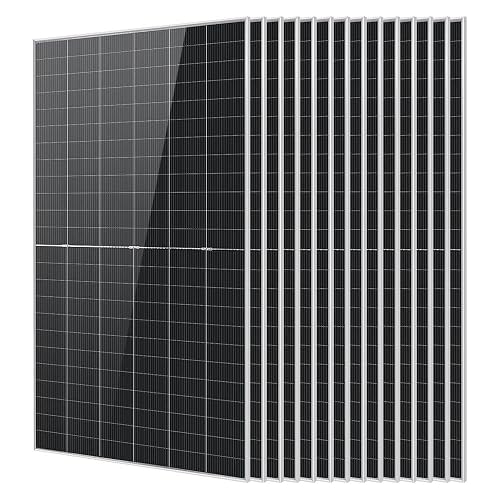 TOP CHOICEBest for large rooftopsSUNGOLDPOWER 590W Bifacial Solar Panel 14PCSView on Amazon
- 3
 TOP CHOICEBest for shaded sitesSTAR 495W Bifacial Solar PanelView on Amazon
- 4
 Best for compact installs450W Bifacial Solar Panel, Double-GlassView on Amazon
- 5
 Best for curved or lightweight mounts800W Flexible Solar Panel KitView on Amazon
- 6
 Best budget pickRenogy Solar Panels 400 Watt N-Type KitView on Amazon
Our Top Picks
Quick Comparison
| Product | Best for | Key feature |
|---|---|---|
| JJN Bifacial 2Pcs 425 Watt N-Type Solar Panel | Best overall | Bifacial N-type cells, 25% efficiency claim |
| SUNGOLDPOWER 590W Bifacial Solar Panel 14PCS | Best for large rooftops | High wattage per module, 14-panel set |
| STAR 495W Bifacial Solar Panel | Best for shaded sites | Anti-shade design, IP68 junction box |
| 450W Bifacial Solar Panel, Double-Glass | Best for compact installs | Double-glass build, dual-module parallel design |
| 800W Flexible Solar Panel Kit | Best for curved or lightweight mounts | Bendable ETFE surface |
| Renogy Solar Panels 400 Watt N-Type kit | Best budget pick | Two-panel kit, IP67 rating |
JJN Bifacial 2Pcs 425 Watt N-Type Solar Panel
25% High Efficiency Monocrystalline Solar Panel for 12V/24V/48V PV Systems, Homes, Farms, RVs & Off-Grid Applications JJN Bifacial 2Pcs 425 Watt N-Type Solar Panel, Total 850W, UL 61730, 16BB
Best for: Overall value for general-purpose commercial and farm builds.
This is a two-pack of 425-watt bifacial modules, which suits buyers who want a balanced mix of output and manageable panel size. Its listing names UL 61730 certification and 16BB cell layout.
Key specs
- Rated output: 425 W per panel, 850 W for the pair
- Cell type: N-type monocrystalline, 16BB
- Certification: UL 61730
- Listed efficiency: 25%
Pros
- Bifacial cells can capture reflected light from light-colored roofs or ground
- Two-pack makes system sizing straightforward
- N-type cells generally hold up better to heat than older P-type designs
Cons
- Efficiency figures are manufacturer claims and vary with real conditions
- Bifacial gain depends heavily on the mounting height and surface below
Bottom line: A sound first choice for a small commercial roof or farm shed that needs predictable output without unusual mounting.
SUNGOLDPOWER 590W Bifacial Solar Panel 14PCS
SUNGOLDPOWER 590W Bifacial Solar Panel 14PCS,N-Type 16BB,High Efficiecy Up to 30% Extra Power,Vmp 44.4V/PCS,for 24V/48Vdc Home Backup,Energy Storage,On Grid/Off-Grid System UL61730 (14*590W Bifacial)
Best for: Large rooftops and multi-panel arrays where fewer, higher-wattage modules reduce racking work.
Fourteen 590-watt modules add up to a substantial array. Because each panel is physically larger, the cost-per-square-meter comparison depends on how completely you fill the available roof.
Key specs
- Rated output: 590 W per panel, 14 panels in the set
- Cell type: N-type, 16BB, bifacial
- Voltage: Vmp 44.4 V per panel
- Certification: UL 61730
Pros
- High wattage per module lowers balance-of-system work per watt
- Suits 24V and 48V battery-backed and grid-tie designs
- Bifacial design adds output where mounting allows light underneath
Cons
- Large, heavy modules need a structural check and experienced installers
- Buying 14 panels is a major commitment for a small site
Bottom line: Best for buyers with a large, structurally sound roof who want to minimize module count.
STAR 495W Bifacial Solar Panel
Monocrystalline Bifacial Solar Panels for 24V/48V Systems, Anti-Shade Design, Reliable Power for RV/Marine/Roof, IP68 STAR 495W Bifacial Solar Panel – UL61730 N‑Type 25.6% High‑Efficiency, 16BB
Best for: Sites with partial shading, where the anti-shade layout matters more than peak output.
Shading is one of the largest hidden losses in any array. This panel’s listing emphasizes an anti-shade design and an IP68 rating, which points to a build meant for wet or harsh environments.
Key specs
- Rated output: 495 W
- Cell type: N-type, 16BB, bifacial
- Certification: UL 61730
- Ingress rating: IP68 (per listing)
Pros
- Anti-shade design limits output loss from partial shadow
- IP68 rating suits outdoor, marine and RV exposure
- Works with 24V and 48V systems
Cons
- Specialized shade performance is harder to verify without site data
- Premium build features usually mean a higher cost per watt than basic modules
Bottom line: Pick this if your roof or yard has trees, vents or parapets casting shadows for part of the day.
450W Bifacial Solar Panel, Double-Glass
450W Bifacial Solar Panel, N-Type 16BB Monocrystalline, Double-Glass, Dual-Module Parallel Anti-Shade Design, Up to 25.6% Conversion Efficiency, for Home Rooftops, RVs & Off-Grid Systems
Best for: Compact installations where durability and dual-module flexibility matter.
Double-glass construction is common in higher-end modules because it resists flexing and moisture better than glass-backsheet designs. This panel also highlights a dual-module parallel layout.
Key specs
- Rated output: 450 W
- Cell type: N-type monocrystalline, 16BB, bifacial
- Construction: double-glass
- Listed conversion efficiency: up to 25.6%
Pros
- Double-glass build is generally more durable in heat and humidity
- Dual-module parallel design helps with anti-shade performance
- Good output per unit area for tight spaces
Cons
- Glass-on-glass panels weigh more, which affects roof load and shipping
- Efficiency claims should be confirmed against the datasheet for your site
Bottom line: A strong fit for limited roof space where you want long-term durability from the module itself.
800W Flexible Solar Panel Kit
800W Flexible Solar Panel, 2x400W Monocrystalline Solar Panel Kit for 12V/24V Battery,ETFE Bendable to 240° for RV, Boat, Van, Off-Grid Charging
Best for: Curved surfaces, vans, boats and lightweight mounts where rigid glass panels are impractical.
This kit uses two 400-watt monocrystalline modules with an ETFE surface that bends. It is designed for mounts that cannot carry the weight or rigidity of framed panels.
Key specs
- Kit output: 800 W (2 x 400 W)
- Cell type: monocrystalline
- Surface: ETFE, bendable to about 240 degrees per listing
- Voltage support: 12 V and 24 V battery systems
Pros
- Lightweight and flexible, reducing structural load
- Good for curved roofs and irregular surfaces
- Kit format simplifies matching two modules
Cons
- Flexible panels generally run hotter and wear faster than rigid glass modules
- Not well suited to permanent ground-mount or long-life commercial roofs
Bottom line: Choose this for mobile or lightweight applications, not for a long-term fixed commercial array.
Renogy Solar Panels 400 Watt N-Type Kit
2PCS 200W Solar Panels for RV Class B Van Marine Cabin Roof Home Farm and Other Off-Grid Systems, IP67 Renogy Solar Panels 400 Watt N-Type, 16BB 25% High-Efficiency
Best for: Budget-conscious buyers building a small off-grid or workshop system.
This two-panel kit gives an accessible entry point into N-type, high-efficiency modules. Its IP67 rating is listed as protection against dust and temporary immersion.
Key specs
- Kit output: 200 W x 2 panels (400 W total, per listing)
- Cell type: N-type, 16BB
- Ingress rating: IP67
- Listed efficiency: 25%
Pros
- Lower entry cost for a small system
- Recognized brand with broad owner familiarity
- IP67 rating suits RVs, vans and outbuildings
Cons
- Smaller modules mean more racking and wiring per watt
- Not sized for large commercial roofs
Bottom line: A practical, budget-friendly kit for small off-grid or auxiliary power needs.
Buying Guide
Cell technology and efficiency
N-type and monocrystalline cells generally deliver higher efficiency and better temperature behavior than older designs. Compare the datasheet numbers, not just marketing headlines, and remember that a few percentage points of efficiency change the square-meter math less than shading and tilt do.
Good picks for this: JJN Bifacial 2Pcs 425 Watt N-Type Solar Panel, Renogy Solar Panels 400 Watt N-Type kit
Wattage and panel size
Divide the rated wattage by the panel’s area in square meters to get watts per square meter. This is the figure that ties directly to the cost of 1 m2 of installed capacity. Larger modules reduce the number of connections but need stronger support.
Good picks for this: SUNGOLDPOWER 590W Bifacial Solar Panel 14PCS, 450W Bifacial Solar Panel, Double-Glass
Voltage compatibility
Confirm that open-circuit voltage and maximum power voltage match your charge controller or inverter. A 24V or 48V system typically needs modules and strings wired to those targets. Mismatched voltage is a common cause of wasted capacity and equipment damage.
Good picks for this: STAR 495W Bifacial Solar Panel, 800W Flexible Solar Panel Kit
Shading performance
Partial shade can cut output far beyond the shaded area if cells are wired in series without protection. Look for anti-shade or dual-module designs if vents, parapets or trees will cast shadows during part of the day.
Good picks for this: STAR 495W Bifacial Solar Panel, 450W Bifacial Solar Panel, Double-Glass
Mounting and structural fit
Check the weight per panel and the roof load rating before you buy. Flexible modules reduce load but sacrifice lifespan. Rigid glass modules add weight but generally last longer in outdoor service. A structural engineer should review large commercial roofs.
Good picks for this: 800W Flexible Solar Panel Kit, 450W Bifacial Solar Panel, Double-Glass
Durability and weather rating
Ingress ratings such as IP67 and IP68 describe resistance to dust and water. Double-glass construction tends to resist moisture and flex better over years of thermal cycling. Ask for the warranty terms covering output and materials.
Good picks for this: Renogy Solar Panels 400 Watt N-Type kit, STAR 495W Bifacial Solar Panel
Intended use and system type
Off-grid battery systems, grid-tied commercial roofs and mobile vehicles each have different priorities. Match the panel to the use case rather than choosing the highest wattage by default. Large arrays for commercial buildings should be designed by a licensed installer and reviewed against local code.
Good picks for this: JJN Bifacial 2Pcs 425 Watt N-Type Solar Panel, Renogy Solar Panels 400 Watt N-Type kit
FAQ
What is the average cost of 1 m2 commercial solar panel?
The figure depends on panel technology, wattage, the installation site and labor, and it changes with market conditions. Compare the cost per watt and the watts per square meter from each datasheet, then get quotes from licensed installers for your location.
How many watts fit in one square meter?
Most modern commercial-grade modules deliver roughly 200 to 230 watts per square meter, depending on efficiency and cell layout. Divide rated wattage by the module’s area to check any specific product.
Are bifacial panels worth the extra cost?
Bifacial panels can add output when light reaches the back of the module, such as from a light-colored roof surface or an elevated ground mount. The gain varies with mounting height and surface reflectivity, so model it for your site before deciding.
Do flexible panels last as long as rigid ones?
Generally not. Flexible modules often run hotter and show more wear over time than framed glass panels. They suit mobile and lightweight uses better than permanent commercial installations.
Can I wire panels of different wattages together?
Mixing modules in one string can reduce output because the weakest panel limits the string. Keep panels matched in wattage and voltage where possible, and confirm the design with your installer or the inverter manufacturer.
Do I need a permit for a commercial solar array?
In most places, yes. Permitting, interconnection and structural review are typically required for commercial systems. Consult a licensed electrician or solar professional and your local building department before installing.
Conclusion
Each panel here serves a different need. The JJN bifacial pair is a balanced default for general commercial and farm work. The SUNGOLDPOWER 14-panel set suits large, structurally sound roofs. The STAR panel fits shaded sites, the double-glass 450W panel suits tight spaces, the flexible kit fits mobile or curved mounts, and the Renogy kit is a practical budget choice for small off-grid systems. Calculate watts per square meter for each option before comparing the cost of 1 m2 of installed capacity.
Sources
- Federal guidance on solar energy technologies, system sizing and commercial installation considerations (energy.gov)
- Research data on photovoltaic module performance, efficiency trends and cost benchmarks (nrel.gov)
- Information on UL 61730 safety certification for photovoltaic modules (ul.com)
Related reading
- Cost of Commercial Solar Panel Installation: What Drives It and How to Plan
- Commercial Solar Panel System Cost: A Step-by-Step Guide for Property Owners
- Commercial Solar Panel Cleaning Cost: What Building Owners Should Expect
- Average Solar Panel Installation Cost Uk: A Practical Guide (2026)
- Average Cost of Solar Panel and Battery Installation: A Homeowner's Guide
About Claire Whitaker
Claire Whitaker is part of our editorial team and reviews and edits our home solar guides, checking product details against manufacturer specifications and owner feedback.