By Claire Whitaker
Updated November 2026
Solar panel to inverter wiring is one of the few parts of a home solar setup where a poor choice of cable can cause real trouble, from voltage drop to heat at the connectors. Choosing the right cable means matching wire gauge, insulation rating and connector type to your panel output and inverter input. The picks below were selected by reviewing manufacturer specifications, brand reputation and the patterns owners commonly report, filtered for cables that suit small DIY and portable-style systems.
Our top picks at a glance
- 1
 TOP CHOICEBest overallSolar Battery Cable – 10 Gauge 3FT Power Inverter CableView on Amazon
- 2
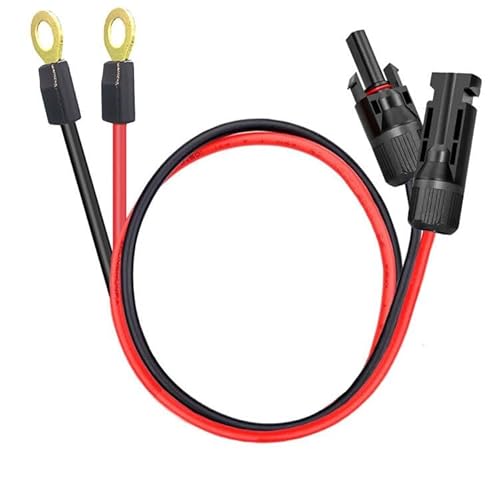 Best for adapting to an O-ring battery connectionSolar to O Ring Connecter 10AWG 60cm Solar Panel Adaptor Extension CableView on Amazon
- 3
 Best budget pick for portable charging setupsSolar Panel Connectors to DC 5.5×2.1mm Extension Power Cable 14AWG (4.9FT)View on Amazon
Our Top Picks
| Product | Best for | Key feature |
|---|---|---|
| Solar Battery Cable – 10 Gauge 3FT Power Inverter Cable | Battery-to-inverter and charge controller runs | 10 gauge conductor with flame-retardant protective sleeving |
| Solar to O Ring Connecter 10AWG 60cm Adaptor Extension Cable | Connecting panels to O-ring style battery and inverter terminals | Short 60 cm run with 10 AWG conductor |
| Solar Panel Connectors to DC 5.5×2.1mm Extension Cable 14AWG | Small portable generators and low-power charger inputs | DC 5.5×2.1 mm plug with 14 AWG extension run |
Solar Battery Cable – 10 Gauge 3FT Power Inverter Cable
Solar Battery Cable – 10 Gauge 3FT Power Inverter Cable with PV Flame Retardant Protective Sleeving Connect Battery and Charge Controller for Solar Panel Automotive RV Motorcycle Marine
Best for: Battery-to-inverter and charge controller connections in a compact system.
This cable suits homeowners building a small off-grid or backup system who need a short, heavy-gauge run between a battery and an inverter or charge controller. Its short length keeps voltage drop low, which matters when current is high.
Key specs
- 10 gauge copper conductor (per listing name)
- 3 ft (about 0.9 m) length
- PV flame-retardant protective sleeving
Pros
- Heavier 10 gauge wire handles higher current than thinner options
- Short length limits voltage drop and clutter
- Flame-retardant sleeving adds a layer of protection near the battery
Cons
- At 3 ft it is too short for many rooftop or wall-mounted layouts
- Fixed connector ends may not match every inverter terminal
Bottom line: Best suited to someone running a short battery-to-inverter link who wants heavy-gauge wire and protective sleeving.
Solar to O Ring Connecter 10AWG 60cm Solar Panel Adaptor Extension Cable
Solar to O Ring Connecter,10AWG 60cm Solar Panel Adaptor Extension Cable,Solar Battery connectors for Solar Generator Inverter Battery Pack Charger
Best for: Adapting solar panel output to O-ring style battery and inverter terminals.
This adaptor is for installers who have panels with one connector type and an inverter or battery that uses ring terminals. The 60 cm run keeps the conductor short and neat in a small enclosure.
Key specs
- 10 AWG conductor (per listing name)
- 60 cm (about 2 ft) length
- O-ring style terminal on the adaptor end
Pros
- Short run keeps voltage drop and wire clutter low
- Bridges common panel-to-terminal mismatches
- 10 AWG conductor suits moderate current
Cons
- 60 cm is too short for panels mounted far from the inverter
- Adaptors add a connection point that must be torque-checked
Bottom line: A practical choice for compact setups where a short, adapted connection is all that is needed.
Solar Panel Connectors to DC 5.5×2.1mm Extension Power Cable 14AWG (4.9FT)
Solar Panel Connectors to DC 5.5×2.1mm Extension Power Cable 14AWG Solar Panel Converter Cable for Solar Panel Charger and Portable Solar Generator(4.9FT)
Best for: Small portable generators and low-power charger inputs.
This extension suits lightweight setups such as a small portable panel feeding a DC charger or power station. It is a low-current option, not a substitute for heavier wire on a whole-house system.
Key specs
- 14 AWG conductor (per listing name)
- About 4.9 ft (1.5 m) length
- DC 5.5 x 2.1 mm barrel plug end
Pros
- Common barrel plug suits many small chargers and generators
- Longer run than the two cables above gives more placement freedom
- Lightweight and easy to route for portable use
Cons
- 14 AWG is thinner, so voltage drop grows on longer runs and higher currents
- Not intended for main battery or whole-home inverter circuits
Bottom line: Right for light portable and charger use; homeowners wiring a permanent system should choose heavier gauge wire.
Buying Guide
Wire gauge and current capacity
Thicker wire (lower AWG number) carries more current with less voltage drop. Check the inverter’s maximum input current and the panel’s short-circuit current, then size the conductor for the full run length. Manufacturers’ ampacity tables and the National Electrical Code are the standard references for this.
Good picks for this: Solar Battery Cable – 10 Gauge 3FT; Solar to O Ring Connecter 10AWG 60cm
Connector type and compatibility
Panels, inverters and batteries often use different terminals, such as MC4, O-ring, or barrel plugs. Confirm the connector on each end before buying, and use an adaptor only where the polarity and rating are clearly marked.
Good picks for this: Solar to O Ring Connecter 10AWG 60cm; Solar Panel Connectors to DC 5.5×2.1mm Extension Cable
Run length and voltage drop
Longer runs lose more voltage. Keep low-voltage DC runs as short as practical, and step up the wire gauge if the run is long. Short runs are common in compact battery-to-inverter links.
Good picks for this: Solar Battery Cable – 10 Gauge 3FT; Solar Panel Connectors to DC 5.5×2.1mm Extension Cable
Insulation and UV or weather rating
Cables outdoors need sunlight-resistant, flame-retardant insulation. Look for “PV wire” or UV-rated jacketing in the specifications, and protect any exposed run in conduit or sleeving.
Good picks for this: Solar Battery Cable – 10 Gauge 3FT
Use case: fixed system or portable setup
A permanent installation needs heavier wire and secure, code-compliant connections. Portable setups can use lighter extension cables, but should stay within the charger or generator’s rated input.
Good picks for this: Solar Panel Connectors to DC 5.5×2.1mm Extension Cable; Solar to O Ring Connecter 10AWG 60cm
Durability and connector security
Loose or corroded connectors cause heat and failure. Choose cables with solid crimped terminals and check that connectors lock or seat firmly. Re-check torque and inspect for discoloration after the first few weeks of operation.
Good picks for this: Solar to O Ring Connecter 10AWG 60cm; Solar Battery Cable – 10 Gauge 3FT
Safety and code compliance
Include overcurrent protection such as a fuse or breaker at the battery and panel side, and follow local permit and electrical code requirements. Solar DC circuits can carry high current even at modest voltages. Consult a licensed electrician or your local building department before connecting anything to your home electrical system.
Good picks for this: Solar Battery Cable – 10 Gauge 3FT
FAQ
What wire gauge do I need for solar panel to inverter wiring?
It depends on the current, the run length and the inverter’s specifications. Short, high-current runs usually call for 10 AWG or heavier, while light portable loads can use 14 AWG. Always check the inverter manual and a voltage-drop calculator before buying.
Can I use an adaptor between my panel and inverter?
Adaptors can work when the polarity, voltage and current ratings match both ends. Make sure every connection is rated for the system, and check tightness after installation.
Do I need fuses between the panels and the inverter?
Most installations include overcurrent protection on the battery side and often on the array side. The exact requirement depends on your system and local code, so confirm it with a licensed electrician.
Is solar cable the same as regular house wire?
No. Solar DC cable is built for outdoor UV exposure, temperature swings and DC current. Standard indoor wire is not rated for outdoor solar use.
How long can a solar DC cable run be?
There is no single maximum. Longer runs lose more voltage, so keep runs short and increase the wire gauge as the distance grows. Aim to keep voltage drop within the inverter’s stated tolerance.
Can I wire solar panels to my inverter myself?
Some homeowners do, but DC solar wiring involves high current and the risk of arc faults. Many jurisdictions require permits and licensed work for grid-tied systems. Consult a licensed electrician or your local building department before starting.
Conclusion
For a short battery-to-inverter link, the 10 gauge solar battery cable is the most robust choice of the three. The 10 AWG O-ring adaptor suits compact setups that need to bridge connector types. The 14 AWG extension is best for light portable chargers rather than permanent home systems. Match the cable to your current, run length and connector type, and when in doubt, have a licensed electrician confirm the design.
Sources
- Solar energy system basics and guidance for homeowners considering a home solar installation (energy.gov)
- National Electrical Code requirements that govern DC wiring and overcurrent protection for solar systems (nfpa.org)
- Research on photovoltaic system design, wiring losses and performance (nrel.gov)
Related reading
- Wiring Diagrams for Solar Panel Installation: 4 Best Guides (2026)
- Top 6 Solar Panel Wiring Tools for DIY Installers in 2026
- Solar Panel to House Wiring: A Step-by-Step Guide for Homeowners
- Solar Panel Wiring Repair: A Step-by-Step Guide for Homeowners
- Solar Panel Wiring Installation: A Step-by-Step Guide for Homeowners
About Claire Whitaker
Claire Whitaker is part of our editorial team and reviews and edits our home solar guides, checking product details against manufacturer specifications and owner feedback.