 By Claire Whitaker
Updated November 2026
Anyone researching solar panel manufacturing company startup cost is usually trying to answer a few practical questions at once: what equipment is needed, how the business is structured, what permits and certifications apply, and how much capital a realistic first year demands. Most of the free material online is written for buyers of rooftop systems rather than people building a manufacturing operation, so finding a resource that actually addresses the business side is harder than it sounds. This list compares four books available on Amazon that touch on solar economics, sourcing, and starting a solar-related venture. Each was selected by reviewing its listed scope, the specific topics it covers, and patterns in what owners and readers commonly report, with attention to whether the content is relevant to a manufacturing or business-startup reader rather than only a homeowner.
Our Top Picks
Our top picks at a glance
- 1
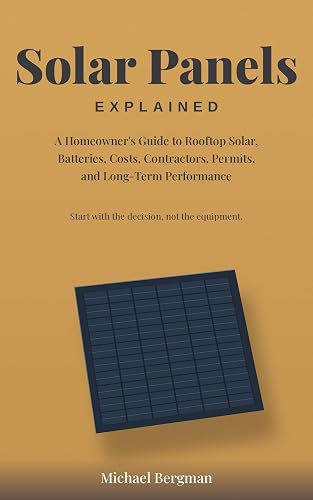 TOP CHOICEBest overallSolar Panels Explained: A Homeowner's Guide to Rooftop Solar, BatterieView on Amazon
- 2
 Best for lead generation strategyJump Start No-Cost Online Solar Energy Business for Anyone: 100 Ways to Get LeadsView on Amazon
- 3
 Best for evaluating financing and costsHOME SOLAR WITHOUT THE EXPENSIVE MISTAKES: How to Compare Quotes, UndeView on Amazon
- 4
 Best budget pick (Spanish-language)Curso de PANELES SOLARES: Electricidad, Sistema FV, costos, tecnologíaView on Amazon
Quick Comparison
| Product | Best for | Key feature |
|---|---|---|
| Solar Panels Explained | Broad understanding of solar economics | Covers costs, batteries, contractors, and permits |
| Jump Start No-Cost Online Solar Energy Business | Founders focused on customer acquisition | Lists 100 lead-generation methods |
| Home Solar Without the Expensive Mistakes | Readers comparing quotes and financing | Focus on spotting costly red flags |
| Curso de Paneles Solares | Spanish-speaking readers | Covers electricity, PV systems, costs, and installation |
Solar Panels Explained: A Homeowner’s Guide to Rooftop Solar, Batteries, Costs, Contractors, Permits, and Long-Term Performance
Solar Panels Explained: A Homeowner's Guide to Rooftop Solar, Batteries, Costs, Contractors, Permits, and Long-Term Performance
Best for: Broad understanding of solar economics
This is the most general of the four and suits someone who needs a working grasp of how solar systems are priced, financed, permitted, and maintained before going deeper into manufacturing decisions. Its homeowner framing means it describes the market from the buyer’s side, which is useful context for anyone planning to sell into that market.
Key specs
- Subject coverage: rooftop solar, batteries, costs, contractors, permits, long-term performance
- Format: paperback book, English
- Audience: homeowners and general readers
Pros
- Covers the full lifecycle of a system, from quoting through long-term performance
- Explains permitting, which is a common stumbling block for new entrants
- Gives a clear picture of how buyers evaluate offers
Cons
- Written for homeowners, so manufacturing equipment and plant economics get little attention
- Startup-cost figures for a factory are not its focus
Bottom line: A good first read for someone who wants to understand the end market before committing capital to production.
Jump Start No-Cost Online Solar Energy Business for Anyone: 100 Ways to Get Leads
JUMP START NO-COST ONLINE SOLAR ENERGY BUSINESS FOR ANYONE: 100 WAYS TO GET LEADS
Best for: Founders focused on customer acquisition
This book is aimed at people starting a solar sales or services business rather than a fabrication plant. It is relevant to the startup side of the question because a manufacturer still needs buyers, distributors, or installer partners, and the lead-generation methods described can help map that stage of the budget.
Key specs
- Subject: lead generation for an online solar business
- Format: paperback book, English
Pros
- Practical checklist format that is easy to act on
- Addresses the sales-side expenses that many startup budgets overlook
- Low-friction introduction to marketing a solar-related business
Cons
- Does not address equipment, factory setup, or production costs
- Strategies are general and may need adapting to a manufacturing audience
Bottom line: Worth considering if your plan includes direct sales alongside production.
Home Solar Without the Expensive Mistakes: How to Compare Quotes, Understand Solar Panels and Batteries, Evaluate Financing, Spot Costly Red Flags (INBALANCEWITHNATURE Book 9)
HOME SOLAR WITHOUT THE EXPENSIVE MISTAKES: How to Compare Quotes, Understand Solar Panels and Batteries, Evaluate Financing, Spot Costly Red Flags, and … You Sign (INBALANCEWITHNATURE Book 9)
Best for: Readers comparing quotes and financing
The title signals a focus on avoiding costly errors when buying a system. For a manufacturing startup, the most useful parts are the discussions of how quotes are built and where financing terms change the true cost, since those same pressures shape how a factory prices its output.
Key specs
- Subject: comparing quotes, panels, batteries, financing, and red flags
- Series: INBALANCEWITHNATURE Book 9
Pros
- Clear focus on evaluating quotes line by line
- Useful framing of financing as part of total cost
- Helps readers recognize warning signs in contracts
Cons
- Consumer-oriented and does not cover factory equipment
- Limited detail on manufacturing business planning
Bottom line: Best for someone who needs to understand how buyers judge solar prices, which informs pricing strategy.
Curso de Paneles Solares: Electricidad, Sistema FV, costos, tecnología, instalación, montaje (Spanish Edition)
Curso de PANELES SOLARES: Electricidad, Sistema FV, costos, tecnología, instalación, montaje. Instala tus propios paneles solares fotovoltaicos (Spanish Edition)
Best for: Spanish-speaking readers
This Spanish-language course covers electricity basics, photovoltaic system components, costs, technology, and installation. It is a reasonable choice for readers who prefer Spanish or who are working in Spanish-speaking markets where the technical vocabulary is needed.
Key specs
- Language: Spanish
- Subject: electricity, PV systems, costs, technology, installation, mounting
Pros
- Covers the technical building blocks of photovoltaic systems
- Includes cost discussion alongside technology
- Accessible for Spanish-language readers
Cons
- Less focused on business planning and factory-scale economics
- Not available for readers who need English-language material
Bottom line: A solid technical primer for Spanish-speaking readers who want the fundamentals before planning production.
Buying Guide
Coverage of Manufacturing Economics
Check whether the book addresses production equipment, facility size, labor, and throughput, not just the end-user market. Many solar books focus on residential purchasing, which is useful context but does not answer factory startup questions directly.
Good picks for this: Solar Panels Explained, Curso de Paneles Solares
Business Planning and Sales Channels
A manufacturing startup needs customers, distributors, or installer partners. Look for material on lead generation, pricing, and go-to-market planning, which determines how quickly capital is recovered.
Good picks for this: Jump Start No-Cost Online Solar Energy Business
Financing and Quote Evaluation
Financing terms and quote structure affect the real cost of a project. Books that explain how line items are built help you price your own output and spot unrealistic assumptions in competitor pricing.
Good picks for this: Home Solar Without the Expensive Mistakes
Technical Fundamentals
Understanding cell technology, electrical components, and system design is necessary before evaluating equipment vendors. Check that the book explains the technical basics clearly, especially if you are new to electricity.
Good picks for this: Curso de Paneles Solares, Solar Panels Explained
Language and Format
Confirm the language and whether the book is print or digital. Technical vocabulary matters, and a translation may not match the terms used by equipment suppliers in your market.
Good picks for this: Curso de Paneles Solares
Currency of Information
Solar technology, incentives, and permitting rules change over time. Check the publication date and treat any figures as a starting point to verify against current local and supplier data.
Good picks for this: Solar Panels Explained, Home Solar Without the Expensive Mistakes
Professional Advice
Startup decisions involving capital, leases, loans, and manufacturing permits carry real financial and legal risk. Books are a starting point, and a qualified accountant, attorney, or engineer should review your plan before you commit funds.
Good picks for this: Home Solar Without the Expensive Mistakes, Jump Start No-Cost Online Solar Energy Business
FAQ
What does solar panel manufacturing company startup cost usually include?
A startup budget typically covers the facility or lease, production equipment, raw materials, labor, certifications, permits, insurance, and working capital for the months before sales begin. The exact mix depends on whether you plan to assemble panels from purchased cells or produce cells in-house, since in-house cell production requires far more equipment.
Is it realistic to start small with solar panel assembly?
Many new manufacturers begin with module assembly rather than cell production, because it requires less specialized equipment. Even so, you should verify equipment needs and sourcing with suppliers and an engineer before making purchases.
Do I need certifications before selling solar panels?
Panels sold in the United States are generally expected to meet recognized safety and performance standards, and buyers and installers often ask for certification documentation. Requirements vary by product, market, and utility program, so confirm them with the relevant standards bodies and a qualified consultant.
Are there government resources for solar manufacturers?
Federal energy agencies publish information on solar technology, market data, and program incentives that can inform planning. Check current program availability directly, since incentives change.
Which book is best for a first read on this topic?
For most readers starting out, Solar Panels Explained gives the broadest orientation. Pair it with a more specialized book on sales or technical fundamentals once you know which gaps matter most to your plan.
Do these books include specific startup budget figures?
Their focus varies, and most are written for homeowners or general readers rather than factory planners. Treat any figures as illustrative and build your own budget from supplier quotes and local cost data.
Should I rely only on books when planning a factory?
No. Books help with orientation, but a manufacturing startup needs a business plan, supplier quotes, engineering review, and legal and financial advice tailored to your location and goals.
Conclusion
For a broad primer, Solar Panels Explained is the most complete starting point, covering the market that manufacturers ultimately serve. If your plan depends on winning customers quickly, the lead-generation guide is a useful addition. Readers who want to understand how quotes and financing shape pricing will benefit from Home Solar Without the Expensive Mistakes, and Spanish-speaking readers will find the technical fundamentals in Curso de Paneles Solares most accessible. None of these replaces a factory-specific budget, so use them to frame questions, then verify numbers with suppliers and professionals.
Sources
- Federal information on solar technology, market data, and incentive programs (energy.gov)
- Research on photovoltaic technology, system costs, and manufacturing trends (nrel.gov)
- Safety and certification standards relevant to electrical and solar products (ul.com)
Related reading
- Top 5 Solar Panel Manufacturing Plant Cost Guides for Homeowners Compared
- Solar Panel Manufacturing Unit Cost: Our Picks for Homeowners (2026)
- Solar Panel Manufacturing Machine Cost: 4 Best Resources Compared
- What Is the Cost of Roof Solar Panels? A Homeowner's Q&A
- What Does the Cost of Thermal Solar Panels Look Like for a Home?
- Vivint Solar Panel Cost: What Homeowners Should Expect Before Signing
About Claire Whitaker
Claire Whitaker is part of our editorial team and reviews and edits our home solar guides, checking product details against manufacturer specifications and owner feedback.



