 By Claire Whitaker
Updated November 2026
Homeowners who need to replace roof and add solar panels usually want one of two things: a mounting system that holds panels securely on a new or freshly re-roofed surface, or the panels themselves sized for a home or outbuilding. This list focuses on products that fit that job. The selection criteria were fit for roof-mounted use, compatibility with metal, tin and flat roof surfaces, panel wattage and output suited to residential or off-grid loads, weather and waterproof ratings stated by manufacturers, and the kind of feedback owners commonly report about installation and durability. We did not test these products ourselves; the comparison draws on published specifications and general owner feedback patterns.
Our top picks at a glance
- 1
 TOP CHOICEBest overall3KW Solar Panels with Roof Mounting Hardware (Add Your own Solar Inverter)View on Amazon
- 2
 TOP CHOICEBest for metal roofsAluminum, Waterproof, Complete Solar Panel Mounting Kit for 4-5 Solar PanelsView on Amazon
- 3
 TOP CHOICEBest for small roofs25% High-Efficiency 100W Solar Panel for RV, Marine, Roof, HomeView on Amazon
- 4Best for larger systems5KW Solar Panels with Roof Mounting Hardware (Add Your own Solar Inverter)View on Amazon
- 5
 Best rail kit for four panelsSolar Panel Mounting Kit For 4 Panels, Aluminum Rails, BlackView on Amazon
- 6
 Best for off-grid cabins2PCS 200W Solar Panels for RV Class B Van Marine Cabin Roof Home Farm and Off-Grid SystemsView on Amazon
- 7
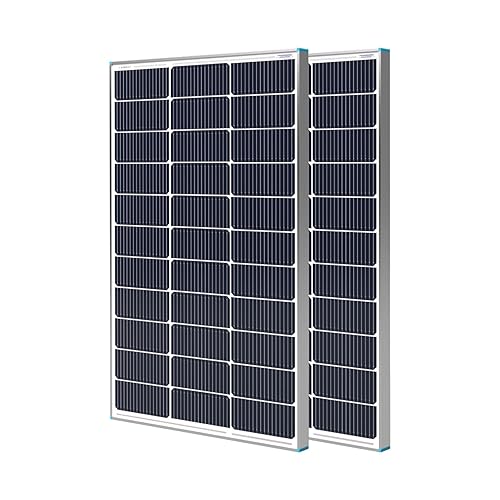 Best budget pick200 Watt Solar Panel for 12V Battery Systems, IP67 Renogy Solar Panels 100W 2PCSView on Amazon
Our Top Picks
Quick Comparison
| Product | Best for | Key feature |
|---|---|---|
| 3KW Solar Panels with Roof Mounting Hardware | Whole-home roof systems | Panels and mounting hardware in one package |
| Aluminum Waterproof Complete Solar Panel Mounting Kit | Metal, tin and flat roofs | Weather-resistant aluminum rails and clamps |
| 25% High-Efficiency 100W Solar Panel | Small roofs and sheds | Frameless, IP68-rated design |
| 5KW Solar Panels with Roof Mounting Hardware | Larger roofs and higher loads | Higher capacity with mounting hardware included |
| Solar Panel Mounting Kit For 4 Panels | Four-panel roof layouts | Rails, end clamps, center clamps and wrench included |
| 2PCS 200W Solar Panels IP67 | Off-grid cabins and farm buildings | IP67 rating and N-type cells |
| Renogy Solar Panels 100W 2PCS | Budget-conscious builds | Two-panel set with N-type cells |
3KW Solar Panels with Roof Mounting Hardware (Add Your own Solar Inverter)
3KW Solar Panels with Roof Mounting Hardware (Add Your own Solar Inverter)
Best for: Whole-home roof systems where you want panels and mounting hardware bought together.
This kit suits homeowners who have just replaced their roof and want a ready-to-mount array. Because the inverter is sold separately, it works best for someone who has already chosen a compatible inverter or who will have an installer size it.
Key specs
- Listed capacity: 3 kW
- Includes roof mounting hardware
- Inverter not included
Pros
- Panels and hardware come together, which simplifies planning
- 3 kW is a common size for partial-home offsets
- Works with a range of standard grid-tie or hybrid inverters
Cons
- Inverter is a separate purchase and must be matched
- Electrical work usually needs a licensed installer or inspection
Bottom line: A solid pick for homeowners who want a complete roof array and are ready to handle inverter selection.
Aluminum, Waterproof, Complete Solar Panel Mounting Kit for 4-5 Solar Panels
Aluminum, Waterproof, Complete Solar Panel Mounting Kit, Weather Resistant, For Metal Roof Tin Roof Flat Roof Sheet Roof Solar Panel Roof Mounting Kit for 4-5 Solar Panels, 8 x 47.2 in Rails
Best for: Metal, tin and flat roofs that need a dedicated mounting system.
This is a mounting-only kit, so it fits homeowners who already own panels and need a secure, weather-resistant way to attach them to a new roof surface.
Key specs
- Designed for 4-5 solar panels
- Listed rail length: 47.2 in
- Aluminum, weather-resistant construction
Pros
- Aluminum resists corrosion better than many steel alternatives
- Covers metal, tin and flat roof types as listed
- Complete kit reduces missing-part surprises
Cons
- Panels are not included
- Roof attachment still requires proper flashing and sealing
Bottom line: The right choice for owners with metal or tin roofs who already have panels and want a dedicated rail system.
25% High-Efficiency 100W Solar Panel for RV, Marine, Roof, Home
25% High-Efficiency 100w solar panel for RV, Marine, Roof, Home,Maintenance-Free,IP68 Waterproof,Black STAR 200 Watt Solar Panel – 2PCS 100W Solar Panels with Frameless Design
Best for: Small roofs, sheds and secondary structures.
A 100-watt panel is modest, which makes it practical for shed roofs, garden buildings or supplemental charging rather than whole-home power.
Key specs
- Listed output: 100 W per panel
- Frameless design as stated in the listing
- IP68 waterproof rating as stated
Pros
- Compact footprint suits small roof areas
- Frameless design can reduce weight
- Waterproof rating supports outdoor exposure
Cons
- Limited output for household loads
- Mounting hardware is not included
Bottom line: Best for small structures and supplemental power where a single large array is not needed.
5KW Solar Panels with Roof Mounting Hardware (Add Your own Solar Inverter)
5KW Solar Panels with Roof Mounting Hardware (Add Your own Solar Inverter)
Best for: Larger roofs and households with higher daily electricity use.
This is the higher-capacity sibling of the 3 kW kit and suits homes where a 3 kW array would cover too small a share of consumption.
Key specs
- Listed capacity: 5 kW
- Includes roof mounting hardware
- Inverter not included
Pros
- Higher capacity covers more household load
- Hardware included, simplifying the mounting stage
- Scales well for future expansion planning
Cons
- Requires more roof area and a correctly sized inverter
- Permitting and interconnection needs are more involved
Bottom line: A good fit for owners with ample south- or west-facing roof space and a plan for professional installation.
Solar Panel Mounting Kit For 4 Panels, Aluminum Rails, Black
Solar Panel Mounting Kit For 4 Panels, Included 10 X 4.72 In Rails+4 End Clamps+6 Center Clamps+1 Wrench, For Roof, RV, Boat Solar Panel Mounting Brackets For Roof, Aluminum Solar Rails, Black
Best for: Four-panel roof layouts that need a straightforward rail system.
The kit is sized for four panels and includes the clamps and wrench needed for assembly, which helps DIYers keep track of parts.
Key specs
- Designed for 4 panels
- Rails: 10 x 4.72 in as listed
- Includes end clamps, center clamps and a wrench
Pros
- Clamp count matches the listed panel number
- Black finish suits many roof colors
- Wrench is included for assembly
Cons
- Panels not included
- Fit depends on checking panel dimensions against rail spacing
Bottom line: A practical choice for a four-panel array where you already have panels and want matching hardware.
2PCS 200W Solar Panels for RV Class B Van Marine Cabin Roof Home Farm and Off-Grid Systems
2PCS 200W Solar Panels for RV Class B Van Marine Cabin Roof Home Farm and Other Off-Grid Systems, IP67 Renogy Solar Panels 400 Watt N-Type, 16BB 25% High-Efficiency
Best for: Off-grid cabins, farm buildings and rooftop systems exposed to weather.
Two 200-watt panels give a meaningful output for small off-grid loads, and the IP67 rating suits harsh outdoor conditions.
Key specs
- Listed output: 2 x 200 W
- IP67 rating as stated
- N-type cell design as stated
Pros
- Two panels give a useful combined output
- IP67 rating supports weather exposure
- N-type cells are commonly associated with better temperature performance
Cons
- Mounting hardware is not included
- Needs a charge controller and battery bank for off-grid use
Bottom line: A strong option for off-grid roof arrays where weather durability matters.
200 Watt Solar Panel for 12V Battery Systems, IP67 Renogy Solar Panels 100W 2PCS
200 Watt Solar Panel for 12V Battery Systems, IP67 PV Module for RV Marine Rooftop Farm Trailer Cabin Home Off-Grid Renogy Solar Panels 100W 2PCS, N-Type Solar Panel 25% High-Efficiency 16BB
Best for: Budget-conscious builds and 12V battery systems.
This set of two 100-watt panels is an accessible way to add roof solar to a small 12V setup such as a cabin, shed or trailer.
Key specs
- Two panels listed at 100 W each
- IP67 rating as stated
- N-type, 16BB cell design as stated
Pros
- Lower total output suits modest 12V loads
- Two-panel set simplifies a small roof layout
- IP67 rating supports outdoor use
Cons
- Not sized for whole-home electricity
- Mounting hardware and wiring are separate purchases
Bottom line: A sensible choice for small 12V systems where budget is a priority.
Buying Guide
Roof Material and Mounting Compatibility
Metal, tin, shingle and flat roofs each need a different attachment method. Check whether a kit is listed for your roof type and confirm that flashing and sealing are included or planned. Attaching to a freshly replaced roof without proper flashing is a common cause of leaks.
Good picks for this: Aluminum Waterproof Complete Solar Panel Mounting Kit, Solar Panel Mounting Kit For 4 Panels
Panel Wattage and Total System Size
Add up the daily kilowatt-hours your household uses, then estimate how many panel watts you need to cover part or all of that load. Small structures often need only 100 to 400 watts, while a whole home usually needs several kilowatts.
Good picks for this: 3KW Solar Panels with Roof Mounting Hardware, 5KW Solar Panels with Roof Mounting Hardware
Weather and Waterproof Ratings
Look for ingress protection ratings such as IP67 or IP68 in the listing. These describe resistance to dust and water. Pair the rating with corrosion-resistant mounting hardware, especially in coastal or snowy areas.
Good picks for this: 2PCS 200W Solar Panels IP67, 25% High-Efficiency 100W Solar Panel
Rail Length and Clamp Count
Measure your roof area and the panel dimensions before buying rails. Confirm that the clamp count matches the number of panels and that the rail length allows proper spacing and any required ventilation gap.
Good picks for this: Solar Panel Mounting Kit For 4 Panels, Aluminum Waterproof Complete Solar Panel Mounting Kit
Intended Use Case
Decide whether the array will feed a grid-tied home, an off-grid building or a small 12V battery system. Grid-tied systems require an inverter and utility approval; off-grid systems need batteries and a charge controller.
Good picks for this: Renogy Solar Panels 100W 2PCS, 2PCS 200W Solar Panels IP67
Durability and Materials
Aluminum rails generally resist corrosion better than untreated steel. Frameless panels can reduce weight but may need careful handling. Check that mounting hardware and fasteners are rated for outdoor use.
Good picks for this: Aluminum Waterproof Complete Solar Panel Mounting Kit, 25% High-Efficiency 100W Solar Panel
Installation Requirements and Permits
Roof-mounted solar usually requires a building permit, structural review and an electrical inspection. Many jurisdictions also require utility interconnection for grid-tied systems. Plan these steps before the new roof goes on.
Good picks for this: 3KW Solar Panels with Roof Mounting Hardware, 5KW Solar Panels with Roof Mounting Hardware
FAQ
Should I replace my roof before adding solar panels?
In most cases, yes. A new roof should last the life of the panels, which commonly run 25 years or more. Installing panels on an aging roof can mean removing and reinstalling the array later, which adds labor.
Can I mount solar panels on a metal roof without drilling?
Some systems use clamps that attach to standing seams without penetrating the roof. Check that the kit is specified for your seam profile. Clamp-based systems still need a qualified check of wind and snow loads.
How many panels do I need to power a house?
It depends on your annual electricity use, panel wattage and location. Your utility bill shows monthly kilowatt-hours, which you can use with local sun-hour data to estimate system size. A licensed installer can run a formal sizing calculation.
Do I need a permit to add solar panels to a roof?
Most areas require a permit for roof-mounted solar, along with structural and electrical review. Requirements vary by city and county, so contact your local building department before starting.
Are IP67 and IP68 ratings important?
They indicate how well a panel resists dust and water. IP67 covers temporary immersion, while IP68 covers longer submersion under specified conditions. For roof use, either rating signals good weather resistance.
Do I need a battery to use roof solar panels?
Not for grid-tied systems, which feed power to the home and utility grid. Off-grid systems need batteries to store power for use when the sun is not shining.
Is professional installation required?
Many jurisdictions require a licensed electrician for the wiring and interconnection, and a licensed roofer or installer for roof penetrations. Because electrical and structural work carries real safety risk, consult a qualified professional before you begin.
Conclusion
For a complete grid-tied roof array, the 3 kW or 5 kW kits with included hardware are the most straightforward starting points, with the 5 kW option better for larger homes. If you already own panels and need a dedicated rail system, the aluminum waterproof kit suits metal and flat roofs, while the four-panel rail kit suits compact layouts. For small structures, off-grid cabins and tight budgets, the 200 W IP67 pair and the 100 W Renogy set offer practical starting points. Match the product to your roof type, load and permitting path before you buy.
Sources
- Federal guidance on residential solar energy, system sizing and incentives (energy.gov)
- Research on rooftop solar performance, cost factors and installation practices (nrel.gov)
- Electrical and fire safety standards that apply to rooftop photovoltaic systems (nfpa.org)
Related reading
- Top 5 Ways to Remove Solar Panels to Replace Roof Safelies
- Replace Roof Solar Panels: 7 Best Options for Homeowners in 2026
- How Much to Replace Roof with Solar Panels: 4 Best Picks Compared for Homeowners
About Claire Whitaker
Claire Whitaker is part of our editorial team and reviews and edits our home solar guides, checking product details against manufacturer specifications and owner feedback.