By Emily Reed
Updated November 2026
Homeowners looking into solar net metering tax questions usually want the same few things: a clear explanation of how export credits are taxed, whether federal incentives still apply, and how to keep records that will hold up if the IRS or a utility asks questions. The three picks below were chosen by reviewing their listing details, the scope of their coverage, and the kinds of feedback owners typically report about them. None of these were tested or used by our writers. Each one focuses on a different slice of the home solar tax picture, so the right choice depends on where you are in the process.
Our top picks at a glance
- 1
 TOP CHOICEBest overallSolar Power for Beginners: The Complete Guide to Home Solar Energy, TaView on Amazon
- 2
 Best for financing and storage tax questionsLab Validation Guide for Solar Energy Storage Systems: IEC 62619 SafetView on Amazon
- 3
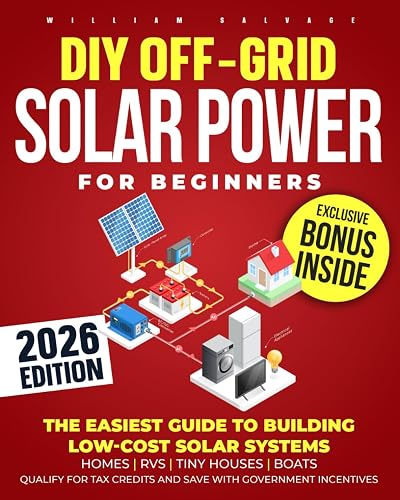 Best budget pickDIY Off-Grid Solar Power for Beginners: The Easiest Guide to BuildingView on Amazon
Our Top Picks
| Product | Best for | Key feature |
|---|---|---|
| Solar Power for Beginners: The Complete Guide to Home Solar Energy, Tax Credits, Batteries, and Generators | First-time owners who want the full picture | Covers tax credits alongside batteries and generators |
| Lab Validation Guide for Solar Energy Storage Systems: IEC 62619 Safety Testing, Performance Metrics & ITC Tax Credit Qualification Under the Inflation Reduction Act | Homeowners adding battery storage | Focuses on ITC qualification for storage systems |
| DIY Off-Grid Solar Power for Beginners: The Easiest Guide to Building Low-Cost Solar Systems for Homes, RVs, Tiny Houses, Boats | Builders on a tight budget | Build-focused guide with incentive notes |
Solar Power for Beginners: The Complete Guide to Home Solar Energy, Tax Credits, Batteries, and Generators
Solar Power for Beginners: The Complete Guide to Home Solar Energy, Tax Credits, Batteries, and Generators
Best for: Homeowners who want one book that connects solar tax treatment to the rest of the system.
This guide suits someone who has just started researching home solar and wants to understand how net metering credits, federal tax credits, batteries, and backup generators fit together. Readers who want to see the tax side in context before talking to an installer or accountant will find it a useful starting point.
Key specs:
- Format: Printed book covering home solar fundamentals
- Topics: Tax credits, batteries, generators, and system basics
- Audience: Beginners to home solar
Pros:
- Covers tax credits in the same book as system design, so the context is clear
- Good for building a basic vocabulary before speaking with installers
- Broad scope makes it easy to see how different parts of a system interact
Cons:
- Broad coverage means less depth on any single tax rule
- Tax rules change, so readers should check current federal and state guidance
Bottom line: Best for beginners who want the whole home solar picture, including the tax side, in one place.
Lab Validation Guide for Solar Energy Storage Systems: IEC 62619 Safety Testing, Performance Metrics & ITC Tax Credit Qualification Under the Inflation Reduction Act
Lab Validation Guide for Solar Energy Storage Systems: IEC 62619 Safety Testing, Performance Metrics & ITC Tax Credit Qualification Under the Inflation Reduction Act
Best for: Homeowners evaluating battery storage and asking whether it qualifies for the Investment Tax Credit.
This title is aimed at readers who already know they want a battery and need to understand the standards and qualification rules that determine whether storage costs can count toward the credit. It is more technical than a general primer, so it fits people comfortable reading specifications.
Key specs:
- Focus: Energy storage system safety and performance
- Standard referenced in the title: IEC 62619
- Tax topic: ITC qualification under the Inflation Reduction Act
Pros:
- Directly addresses ITC qualification for storage, a common point of confusion
- Explains the safety standard that installers and inspectors often reference
- Useful for comparing storage products on documented criteria
Cons:
- Technical density may be heavy for readers new to batteries
- Does not replace advice from a tax professional on your specific return
Bottom line: Best for homeowners who are adding storage and need to understand both the safety standard and the tax qualification rules.
DIY Off-Grid Solar Power for Beginners: The Easiest Guide to Building Low-Cost Solar Systems for Homes, RVs, Tiny Houses, Boats
DIY Off-Grid Solar Power for Beginners: The Easiest Guide to Building Low-Cost Solar Systems for Homes, RVs, Tiny Houses, Boats. Qualify for Tax Credits and Save with Government Incentives.
Best for: Budget-minded builders who want to understand incentives while planning a system.
This guide targets people building their own systems, including off-grid setups, and who want a note on incentives alongside the build steps. It is a practical pick for readers whose main goal is hands-on construction rather than utility billing.
Key specs:
- Format: Printed book for DIY solar builders
- Applications covered: Homes, RVs, tiny houses, and boats
- Incentive coverage: Notes on tax credits and government incentives
Pros:
- Practical focus on building, which suits DIY readers
- Covers several application types, not just fixed homes
- Includes incentive information alongside the build content
Cons:
- Off-grid focus means less relevance for grid-tied net metering questions
- Incentive details can change, so verify current rules before relying on them
Bottom line: Best for DIY builders who are more interested in construction than in net metering billing.
Buying Guide
Coverage of federal tax credits
Check whether the guide explains the federal residential clean energy credit and how it applies to solar panels and storage. Tax rules change, so look for a clear date or edition year and confirm the details against IRS guidance.
Good picks for this: Solar Power for Beginners; Lab Validation Guide for Solar Energy Storage Systems
Battery and storage qualification
If you plan to add batteries, check whether the guide addresses how storage costs are treated and what standards apply. Battery rules differ from panel rules, so a guide that covers both is more useful.
Good picks for this: Lab Validation Guide for Solar Energy Storage Systems; Solar Power for Beginners
Depth versus breadth
Broad guides give you the lay of the land. Specialized guides go deeper on one rule. Decide whether you need a map or a detailed manual before you buy.
Good picks for this: Solar Power for Beginners; Lab Validation Guide for Solar Energy Storage Systems
Your system type
A grid-tied home with net metering has different tax and billing questions than an off-grid cabin or RV. Match the guide to the system you actually plan to install.
Good picks for this: DIY Off-Grid Solar Power for Beginners; Solar Power for Beginners
Technical level
Some readers want plain language. Others want standards references and performance metrics. Read the table of contents or preview pages to judge whether the writing matches your background.
Good picks for this: Solar Power for Beginners; Lab Validation Guide for Solar Energy Storage Systems
Currency and edition date
Because incentive rules are updated, a newer edition is usually safer. Confirm the publication year and check whether the guide references the current federal law.
Good picks for this: Lab Validation Guide for Solar Energy Storage Systems; DIY Off-Grid Solar Power for Beginners
Budget and value
A lower-cost guide can be a good starting point, but compare what each one covers. A book that explains incentives and standards may save more time than a cheaper title that skips them.
Good picks for this: DIY Off-Grid Solar Power for Beginners; Solar Power for Beginners
FAQ
Is net metering income taxable?
Generally, credits you receive on your utility bill for exported solar energy are treated as a reduction in electricity cost rather than as separate income, but the rules depend on your state and utility. Check with a tax professional for your situation.
Do I qualify for the federal solar tax credit with net metering?
Net metering and the federal residential clean energy credit are separate. Many homeowners who own their system and meet the requirements can claim the credit regardless of their utility billing arrangement, but eligibility rules should be confirmed with the IRS guidance for the current tax year.
Do batteries count toward the solar tax credit?
Under current federal rules, qualifying battery storage can be included in the residential clean energy credit when it meets eligibility conditions. Confirm the specific requirements before purchase.
Do I need to report net metering credits on my tax return?
Many utility credits are not reported as income, but you should keep your monthly statements and annual summaries. If you receive a payment for excess generation, it may be reportable. Consult a tax professional for guidance.
Should I keep records for my solar system?
Yes. Keep installation invoices, equipment specifications, interconnection approvals, utility statements, and any tax credit forms. These help document eligibility if questions come up later.
Do state solar tax incentives differ from federal rules?
Yes. Many states offer their own credits, exemptions or property tax treatment for solar, and these vary widely. Check your state energy office or revenue department for current programs.
Conclusion
For most homeowners, the best starting point is a broad guide that explains how net metering credits, federal incentives, and storage fit together. Solar Power for Beginners covers that ground in one place. If you are adding batteries and need to understand qualification rules and safety standards, the Lab Validation Guide for Solar Energy Storage Systems is more specific. DIY Off-Grid Solar Power for Beginners suits readers who are building their own system and want incentive notes alongside construction steps.
Whichever you choose, pair any guide with current IRS and state guidance, and consider speaking with a qualified tax professional before filing. For a deeper look at how credits show up on your bill, read Solar Net Metering Bill Example PDF: How to Read Yours Step by Step and Solar Net Metering Requirements: What You Need to Qualify (Step-by-Step).
Sources
- Overview of residential solar, net metering basics and available federal incentives (energy.gov)
- Current federal rules for the residential clean energy credit and how to claim it (irs.gov)
- State-by-state summaries of net metering and solar tax incentives
Related reading

About Emily Reed
Emily has been writing about home solar for this site, with an eye on clear explanations, honest trade-offs and options for different needs and budgets.