By Claire Whitaker
Updated November 2026
Searching for a solar panel wiring diagram with inverter PDF usually means you want one clear document you can print, keep on the garage workbench, and follow while you connect panels, charge controller, and inverter. The guides below were selected on specifications, publisher reputation, and the patterns owners tend to describe in their feedback: whether diagrams are readable, whether the text explains the reasoning behind each connection, and whether the material covers grid-tied and off-grid setups. Every item is a book or guide, not a physical part, so the focus is on how well each one teaches wiring. Read each description against your own system before buying.
Our top picks at a glance
- 1
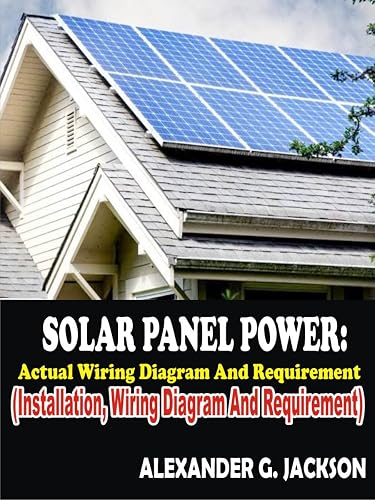 TOP CHOICEBest overallSolar panel power: Actual Wiring Diagram and RequirementsView on Amazon
- 2
 TOP CHOICEBest for design mathSolar PV System Design & Calculation WorkbookView on Amazon
- 3
 TOP CHOICEBest for off-grid buildersThe Beginner's Guide to DIY Off-Grid Solar PowerView on Amazon
- 4
 Best budget pickSolar & 12 Volt Power for beginnersView on Amazon
- 5
 Best for homeownersSolar Panel Installation: A Homeowner's Guide to Residential SolarView on Amazon
- 6
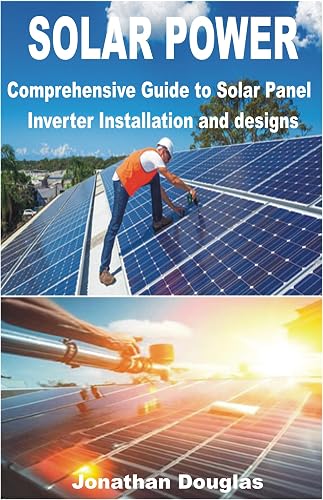 Best for inverter focusSOLAR POWER: Comprehensive Guide to Solar Panel Inverter InstallationView on Amazon
Our Top Picks
Before you start, it helps to know which wiring layout you are building. If you are still deciding between series and parallel strings, read Solar Panel Parallel Wiring Diagram: Step-by-Step Guide for Homeowners alongside whichever guide you choose. For a residential grid-tied system, Home Solar Panel Installation Diagram: How to Read and Build One (Step-by-Step) shows how a full single-line drawing fits together.
| Product | Best for | Key feature |
|---|---|---|
| Solar panel power: Actual Wiring Diagram and Requirements | General wiring reference | Focused on diagrams and requirements |
| Solar PV System Design & Calculation Workbook | Sizing inverters, batteries, and wire | Step-by-step calculation formulas |
| The Beginner’s Guide to DIY Off-Grid Solar Power | Off-grid and backup builds | Multiple complete build examples |
| Solar & 12 Volt Power for beginners | First-time readers on a budget | Plain-language introduction |
| Solar Panel Installation: A Homeowner’s Guide to Residential Solar | Rooftop and home installs | Residential-focused install steps |
| SOLAR POWER: Comprehensive Guide to Solar Panel Inverter Installation | Inverter wiring and layout | Inverter installation and designs |
Solar panel power: Actual Wiring Diagram and Requirements
Solar panel power: Actual Wiring Diagram and Requirements ( Installation, Wiring Diagram and Requirements )
Best for: General wiring reference
This is a good fit for homeowners who want diagrams first and explanations second. It suits someone who already understands the basics and needs a dependable reference while laying out conductors and disconnects.
Key specs
- Format: guide focused on wiring diagrams and requirements
- Scope: installation, wiring diagram, and requirements, per the listing title
Pros
- Diagram-centered layout makes it easy to compare against your own drawing
- Covers requirements alongside the wiring, not just the connections
- Useful as a printed reference at the work site
Cons
- Some readers want more calculation detail than a diagram-focused guide provides
- Check that the system type matches yours before relying on a specific layout
Bottom line: Pick this if you want a straightforward diagram reference for a residential install and plan to check sizing elsewhere.
Solar PV System Design & Calculation Workbook
Solar PV System Design & Calculation Workbook: Step-by-Step Formulas for Sizing Inverters, Battery Banks, Wire Gauges, and Solar Arrays
Best for: Sizing inverters, batteries, and wire
This suits builders who want to work out numbers before they draw a diagram. It is a good companion to a wiring guide because it explains why a given conductor or breaker size is needed.
Key specs
- Format: workbook with step-by-step calculation formulas
- Covers inverter, battery bank, wire gauge, and array sizing, per the listing title
Pros
- Formula-based approach makes sizing decisions traceable
- Useful for checking a diagram someone else drew for you
- Works well alongside a visual wiring reference
Cons
- Less focused on drawing finished wiring diagrams than a dedicated diagram guide
- Calculations still need checking against local electrical code
Bottom line: Best for the planner who wants to confirm wire and inverter sizes before buying parts.
The Beginner’s Guide to DIY Off-Grid Solar Power
The Beginner's Guide to DIY Off-Grid Solar Power: The 7-Step Sizing Plan, Real Wiring Diagrams & 4 Complete Builds: Solar Box, Van/RV, Cabin/Tiny Home, Standalone Blackout Backup – Plus a Boat Bridge
Best for: Off-grid and backup builds
This one is aimed at people building a standalone system for a shed, van, cabin, or emergency backup. It is the most broadly scoped title in this list.
Key specs
- Format: beginner guide with a 7-step sizing plan and real wiring diagrams
- Includes four complete build examples, per the listing title
Pros
- Several complete builds show how diagrams apply to different setups
- Sizing plan gives a structured path from loads to wiring
- Good match for off-grid and blackout backup projects
Cons
- Broad scope means individual topics get less depth
- Off-grid examples may not map directly onto a grid-tied home system
Bottom line: Choose this if your project is off-grid or battery-backed and you want full example builds.
Solar & 12 Volt Power for beginners
Solar & 12 Volt Power for beginners: off grid power for everyone
Best for: First-time readers on a budget
This is a starting point for readers new to solar and 12-volt electrical work. It explains the vocabulary before asking you to wire anything, which helps if terms like amps, volts, and charge controller are still unfamiliar.
Key specs
- Format: beginner introduction to solar and 12-volt power
- Focus: off-grid power for general readers, per the listing title
Pros
- Plain-language approach suits people with no electrical background
- Builds the foundation needed before reading more technical diagrams
- Lower commitment for a first purchase
Cons
- Less depth on inverter and grid-tied wiring
- Readers planning a full home system will need a more advanced guide later
Bottom line: A sensible first book for beginners who want to understand the parts before tackling a full wiring plan.
Solar Panel Installation: A Homeowner’s Guide to Residential Solar
Solar Panel Installation: A Homeowner's Guide to Residential Solar (2026 Edition)
Best for: Rooftop and home installs
Written for homeowners rather than electricians, this guide is aimed at people managing a residential project. It covers the install process from the homeowner’s side of the table.
Key specs
- Format: homeowner’s guide to residential solar installation
- Edition: 2026, per the listing title
Pros
- Written with the homeowner as the reader, not a trade professional
- Useful context for talking with installers and inspectors
- Covers the install from start to finish
Cons
- May be lighter on detailed wire-by-wire diagrams
- Electrical work on a home system should still be checked by a licensed electrician
Bottom line: Good for homeowners who want to understand the whole install, then pair it with a diagram-focused reference.
SOLAR POWER: Comprehensive Guide to Solar Panel Inverter Installation
SOLAR POWER: Comprehensive Guide to Solar Panel Inverter Installation and designs
Best for: Inverter wiring and layout
This title is aimed at readers whose main question is where the inverter goes and how it connects to the array and loads. It suits anyone who has already chosen a panel layout and needs help with the inverter section.
Key specs
- Format: comprehensive guide to solar panel inverter installation
- Covers inverter installation and designs, per the listing title
Pros
- Narrow focus on the inverter makes it easy to find the right section
- Useful for checking inverter input voltage and string arrangement
- Pairs well with a general wiring diagram book
Cons
- Does not replace a full system design for panels, batteries, and protection
- Inverter models vary, so always follow the manufacturer’s manual
Bottom line: Pick this when inverter wiring is the part you are least sure about, and use it with a complete system guide.
Buying Guide
Confirm the system type before you buy
A grid-tied rooftop system, an off-grid cabin, and a battery-backed garage use different wiring layouts. A diagram that fits one may not fit another. Check whether the guide covers your configuration before you spend time on it.
Good picks for this: The Beginner’s Guide to DIY Off-Grid Solar Power, Solar Panel Installation: A Homeowner’s Guide to Residential Solar
Look for clear, readable diagrams
A wiring diagram PDF is only useful if you can read it at arm’s length in a dim garage. Look for guides that label conductors, breakers, and disconnects clearly, and that show the polarity of each connection.
Good picks for this: Solar panel power: Actual Wiring Diagram and Requirements, SOLAR POWER: Comprehensive Guide to Solar Panel Inverter Installation
Check that sizing is explained
Wire gauge, breaker rating, and inverter capacity depend on current and voltage, not just panel count. Guides that show the calculation behind each choice let you verify the numbers instead of copying them. We also found 7 Best Solar Panel Wiring Accessories for Homeowners in 2026 useful on this point.
Good picks for this: Solar PV System Design & Calculation Workbook
Match the voltage level to your project
12-volt, 24-volt, and 48-volt systems each have their own conductor and component considerations. Make sure the diagrams match the voltage you plan to use. A 12-volt beginner book will not cover a 48-volt home battery bank in depth.
Good picks for this: Solar & 12 Volt Power for beginners, The Beginner’s Guide to DIY Off-Grid Solar Power
Consider the inverter type
String inverters, microinverters, and battery-based inverters connect differently. A guide that treats only one type may leave gaps. Read the table of contents to confirm which inverter types are covered.
Good picks for this: SOLAR POWER: Comprehensive Guide to Solar Panel Inverter Installation, Solar Panel Installation: A Homeowner’s Guide to Residential Solar
Prioritize currency and local code awareness
Electrical codes and equipment standards change. Check the publication year and remember that local rules, including permit requirements and rapid shutdown rules, govern your install. No book replaces your local authority having jurisdiction.
Good picks for this: Solar Panel Installation: A Homeowner’s Guide to Residential Solar, Solar panel power: Actual Wiring Diagram and Requirements
Keep a printed copy at the work site
A PDF on a phone screen is harder to use with wet or dirty hands than a printed page. Print the diagrams you need and mark them with your own changes so the drawing matches what you actually built.
Good picks for this: Solar panel power: Actual Wiring Diagram and Requirements, Solar PV System Design & Calculation Workbook
FAQ
What should a solar panel wiring diagram with inverter show?
A good diagram shows the panel strings, combiner or junction points, DC disconnect, charge controller if used, inverter input and output, AC disconnect, and the connection to the main panel. It should also label conductor sizes, breaker ratings, and grounding paths.
Is a wiring diagram PDF enough to install a home system?
A diagram is a reference, not a complete installation plan. Most residential installs require permits, inspection, and in many areas a licensed electrician. Treat any guide as a starting point and confirm the design with your local building department.
What is the difference between a DC and an AC diagram?
The DC side covers the panels, string wiring, combiners, and inverter input. The AC side covers the inverter output, disconnects, and the connection to your household panel. Good guides show both sides separately so you can follow each one.
Do I need a different diagram for a grid-tied system than for off-grid?
Yes. Grid-tied systems feed power back to the utility and use anti-islanding protection. Off-grid systems include battery banks and often a charge controller. Choose a guide that matches your configuration, or read PDF Solar Net Metering Wiring Diagram: A Step-by-Step Guide for Homeowners if net metering is part of your plan.
How do series and parallel connections affect the diagram?
Series connections add voltage, while parallel connections add current. The diagram must show which arrangement you use, because it determines the inverter input window and conductor ratings. For details, see Solar Panel Wiring Connections: Series, Parallel and MC4 Steps.
Which wiring guide works best for a first-time installer?
A beginner introduction helps you learn the terms, then a diagram-focused reference handles the layout. Many first-time builders use both. Check the scope of each title against the system you plan to build.
Should I hire a professional for the wiring?
Solar wiring involves high-voltage DC and grid connections, which carry real shock and fire risk. Consult a licensed electrician or qualified solar installer, especially for anything connected to your home’s main panel.
Conclusion
For a single reference with clear diagrams, the Solar panel power: Actual Wiring Diagram and Requirements guide is the most direct starting point. If your main challenge is sizing wire and inverters, the Solar PV System Design & Calculation Workbook fills that gap. Off-grid and backup builders will get the most from The Beginner’s Guide to DIY Off-Grid Solar Power, while first-time readers may prefer Solar & 12 Volt Power for beginners. Homeowners planning a rooftop install should consider Solar Panel Installation: A Homeowner’s Guide to Residential Solar, and anyone focused on inverter placement will find SOLAR POWER: Comprehensive Guide to Solar Panel Inverter Installation useful. Match the guide to your system type, check its publication date, and have a licensed professional review the final design.
Sources
- Federal guidance on residential solar systems, components, and buying considerations (energy.gov)
- National Electrical Code requirements that govern solar wiring, disconnects, and grounding (nfpa.org)
- Safety certification standards for photovoltaic modules, inverters, and related equipment (ul.com)
Related reading
- Eco Worthy Solar Panel Wiring Diagram PDF: A Step-by-Step Guide
- Wiring Diagrams for Solar Panel Installation: 4 Best Guides (2026)
About Claire Whitaker
Claire Whitaker is part of our editorial team and reviews and edits our home solar guides, checking product details against manufacturer specifications and owner feedback.