By Claire Whitaker
Updated November 2026
If you are planning a van build, the first question is usually the solar panel cost for van setups, and the second is which panel actually fits your roof, your battery bank and your travel style. This guide compares five panels sold on Amazon US that are commonly chosen for RVs, camper vans and off-grid rigs. We judged each one on wattage and voltage compatibility, cell and build quality as the manufacturer describes it, mounting flexibility, weather rating, and the patterns owners tend to mention in their feedback. We did not run these panels through lab tests, so treat the specs as manufacturer claims and check them against your own system.
Our top picks at a glance
- 1
 TOP CHOICEBest overallN-Type 16BB 400W Bifacial Solar Panel, 2Pcs 200 Watt Solar Panel for 12V/24V SystemsView on Amazon
- 2
 TOP CHOICEBest for complete starter kitsECO-WORTHY 200 Watts 12 Volt/24 Volt Solar Panel Kit with 30A PWM Charge ControllerView on Amazon
- 3
 TOP CHOICEBest for high-efficiency single panelsHQST 200W N-Type Solar Panel, 25.4% High Efficiency 16BB Grade A+ CellsView on Amazon
- 4
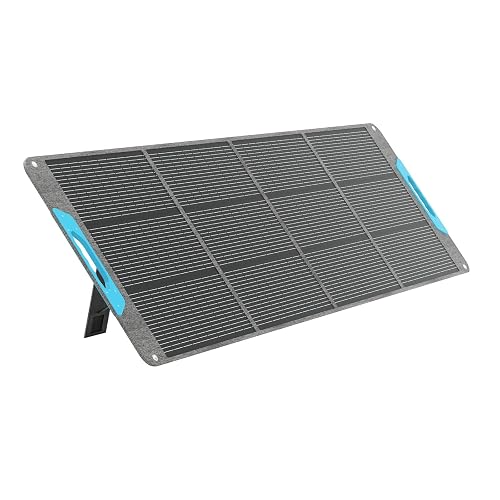 Best for portable or roof-free setupsRENOGY REGO 200W Portable Solar Panel, IP65 Waterproof, FoldableView on Amazon
- 5
 Best budget pick for curved roofsTopsolar 180W Semi-Flexible Solar Panel Charger for RV, Boat, Van and Uneven SurfacesView on Amazon
Our Top Picks
The table below gives a quick overview. Each product gets a closer look afterward.
| Product | Best for | Key feature |
|---|---|---|
| N-Type 16BB 400W Bifacial Solar Panel (2-pack) | Large van roofs and higher daily loads | 400W combined output from two parallel modules |
| ECO-WORTHY 200W 12V/24V Solar Panel Kit | First-time van builders wanting a complete kit | Panel and 30A PWM charge controller included |
| HQST 200W N-Type Solar Panel | Compact roofs needing high output per square foot | Stated 25.4% efficiency and IP65 rating |
| RENOGY REGO 200W Portable Solar Panel | Vans without permanent roof mounting | Foldable and portable for ground or shade setups |
| Topsolar 180W Semi-Flexible Solar Panel | Curved or uneven roof surfaces | Semi-flexible build that conforms to curves |
Our order reflects how well each panel matches the criteria above, with the most flexible and widely applicable options first.
N-Type 16BB 400W Bifacial Solar Panel, 2Pcs 200 Watt Solar Panel for 12V/24V Systems
N-Type 16BB 400W Bifacial Solar Panel, 2Pcs 200 Watt Solar Panel for 12V/24V Systems, 25.6% High Efficiency, Dual-Module Parallel Anti-Shade Design, for RV Van Marine Home Rooftop Off-Grid A related read: Off Grid Solar Panel System Cost: A Step-by-Step Budget Guide (2026).
Best for: Large van roofs and higher daily loads
This two-module set suits van owners who run a fridge, lights, a laptop and maybe a water pump every day and want headroom above the minimum. The parallel design also means one shaded module does not necessarily drag down the whole array as much as a single large panel would.
Key specs
- Listed as 2 × 200W modules (400W total)
- Listed for 12V and 24V systems
- N-type cells with 16BB construction, per the listing
- Listed efficiency of 25.6%
Pros
- Two modules give you flexibility in roof layout
- Bifacial design can pick up some reflected light from the surface below
- Works with both 12V and 24V battery banks
Cons
- Two separate modules mean more wiring and mounting work
- Bifacial gain depends on a reflective mounting surface, which most van roofs do not provide
Bottom line: Best for van owners with a larger roof and a bigger daily power budget who are comfortable with a multi-module install.
ECO-WORTHY 200 Watts 12 Volt/24 Volt Solar Panel Kit with 30A PWM Charge Controller
ECO-WORTHY 200 Watts 12 Volt/24 Volt Solar Panel Kit with High Efficiency Monocrystalline Solar Panel and 30A PWM Charge Controller for RV, Camper, Vehicle, Caravan and Other Off Grid Applications
Best for: Complete starter kits
This kit bundles a monocrystalline panel with a PWM controller, which removes one purchasing decision for someone building their first van system. It is well suited to weekend campers and lighter loads like lights, phone charging and a small fan.
Key specs
- 200W monocrystalline panel
- 12V/24V compatible
- 30A PWM charge controller included
Pros
- Panel and controller arrive together, simplifying the first build
- Suitable for RVs, campers and caravans as well as vans
- Good match for basic lighting and device charging
Cons
- PWM controllers are less efficient than MPPT in cold or low-light conditions
- Owners often outgrow the 30A controller when adding more panels
Bottom line: A sensible choice for beginners who want one box with the essentials and modest power needs.
HQST 200W N-Type Solar Panel, 25.4% High Efficiency 16BB Grade A+ Cells
HQST 200W N-Type Solar Panel, 25.4% High Efficiency 16BB Grade A+ Cells, Compact PV Module with 30-Year Lifespan, IP65 Waterproof for RV, Van, Marine, Rooftop, Off-Grid System
Best for: High-efficiency single panels
If your roof space is limited, output per square foot matters more than raw price per watt. This N-type panel is aimed at owners who want maximum power from a single module without stacking several panels.
Key specs
- 200W N-type module
- Listed efficiency of 25.4%
- IP65 waterproof rating
- Listed lifespan of 30 years
Pros
- High efficiency helps when roof area is tight
- IP65 rating suits rain, dust and road spray
- Single module keeps wiring simple
Cons
- Requires a compatible charge controller, which is not included
- Lifespan claims are long-term projections rather than measured outcomes
Bottom line: Good for van owners who want the most power from a limited roof and already have or plan to buy an MPPT controller.
RENOGY REGO 200W Portable Solar Panel, IP65 Waterproof, Foldable
IP65 Waterproof, Solar Panel for Camping, Hiking, Fishing, Outdoor, RV, Van, Boat, Off Grid Applications RENOGY REGO 200W Portable Solar Panel, Foldable
Best for: Portable or roof-free setups
Not every van owner wants panels bolted to the roof. This foldable unit can be set on the ground, angled toward the sun and moved to follow shade. It also suits vans with roof racks already in use or with roofs that cannot take permanent mounting.
Key specs
- 200W portable panel
- Foldable design
- IP65 waterproof rating
Pros
- No roof drilling or permanent mounting
- Can be repositioned for better sun angle during the day
- Useful as a supplement to a roof-mounted array
Cons
- Requires setup and takedown each time you park, which is a hassle for daily use
- Exposed cables and ground placement raise theft and damage risk
Bottom line: Best for van owners who park often in sunny spots and value flexibility over a fully automated installation.
Topsolar 180W Semi-Flexible Solar Panel Charger for RV, Boat, Van and Uneven Surfaces
Solar Panel Charger Off-Grid for RV Boat Cabin Van Car Uneven Surfaces Topsolar 1PCS 180W Semi-Flexible Solar Panel
Best for: Curved or uneven roof surfaces
Many factory van roofs are curved, and rigid panels can be awkward to mount on them. A semi-flexible panel can follow the contour better and adds less weight. This option suits builders who need a low-profile install.
Key specs
- 180W semi-flexible panel
- Designed for curved and uneven surfaces, per the listing
Pros
- Lighter weight than typical rigid panels
- Conforms to curved roofs
- Low-profile look for stealth builds
Cons
- Flexible panels generally have shorter expected lifespans than rigid glass-covered modules
- Output per square foot is usually lower than premium rigid panels
Bottom line: A practical pick for curved roofs or weight-sensitive builds, provided you accept a shorter service life.
Buying Guide
Wattage and Daily Energy Needs
Start by estimating your daily consumption in amp-hours at your battery voltage. Divide that by your local peak sun hours to get a rough wattage target, then add a margin for cloudy days and losses in wiring and the controller. Many van builders aim for enough panel wattage to recharge their battery bank within a few sunny hours.
Good picks for this: N-Type 16BB 400W Bifacial Solar Panel, ECO-WORTHY 200W Kit
Voltage Compatibility
Check whether the panel and controller match your battery bank, typically 12V or 24V. Mismatched voltage is a common source of wasted output or equipment damage. Panels listed for both 12V and 24V systems offer more flexibility if you later change your battery setup.
Good picks for this: ECO-WORTHY 200W Kit, N-Type 16BB 400W Bifacial Solar Panel
Charge Controller Type
PWM controllers are simpler and cost less but waste more power when the panel voltage is well above battery voltage. MPPT controllers track the maximum power point and usually harvest more energy, especially in cold weather or low light. For a larger array, MPPT is generally the better fit.
Good picks for this: HQST 200W N-Type Solar Panel, ECO-WORTHY 200W Kit
Roof Fit and Mounting Style
Measure your usable roof area after accounting for vents, fans, roof racks and clearance. Rigid panels need flat or gently sloped mounting, while semi-flexible panels handle curves better. If you cannot mount anything permanently, a portable panel may be the only realistic option.
Good picks for this: Topsolar 180W Semi-Flexible Solar Panel, RENOGY REGO 200W Portable Solar Panel
Efficiency and Output per Square Foot
Efficiency tells you how much sunlight becomes electricity. On a small roof, a higher-efficiency module can deliver more watts than a larger but less efficient one. Compare the listed efficiency figures, keeping in mind that they are manufacturer claims under standard test conditions, not guarantees for your roof.
Good picks for this: HQST 200W N-Type Solar Panel, N-Type 16BB 400W Bifacial Solar Panel
Durability and Weather Rating
Van panels face vibration, road grime, rain and temperature swings. Look for a stated IP rating (IP65 is common for outdoor modules) and a clear frame and junction-box design. Flexible panels typically have shorter expected service lives than glass-covered rigid modules, so weigh that against the weight savings.
Good picks for this: HQST 200W N-Type Solar Panel, RENOGY REGO 200W Portable Solar Panel
Care and Maintenance
Keep the surface clean, since dust, bird droppings and road film reduce output. Check cable connectors and mounting hardware after the first few trips, since vibration can loosen them. Manufacturers generally recommend gentle cleaning with water and a soft cloth rather than harsh chemicals.
Good picks for this: ECO-WORTHY 200W Kit, Topsolar 180W Semi-Flexible Solar Panel
FAQ
What does a solar panel setup for a van typically cost?
The total depends on wattage, controller type, battery bank, wiring and mounting hardware, and your roof situation. Panels are often the largest single line item, but the controller and batteries can add up quickly. Compare the complete system you need rather than the panel alone.
How many watts do I need for my van?
Calculate your daily amp-hour use, convert it to watt-hours, and divide by your location’s average peak sun hours. Add a buffer for cloudy days. A licensed installer or an experienced van builder can help you check the math.
Can I use a 12V panel with a 24V battery system?
Only if the panel and controller are designed for it. Panels listed for both 12V and 24V systems are compatible with either bank, but you must match the controller and wiring to your actual battery voltage.
Is an MPPT controller worth it for a van?
In many cases yes, particularly for arrays of 200W or more or in cold or cloudy climates. MPPT controllers generally extract more energy from the same panels than PWM controllers.
Are flexible panels as durable as rigid panels?
Generally, no. Semi-flexible panels are lighter and conform to curves, but their expected service lives are usually shorter than rigid glass-covered modules. Check the manufacturer’s warranty terms before you decide.
Can I install solar panels on my van myself?
Many owners do, but electrical work involves fusing, grounding and battery safety. If you are not confident, consult a qualified electrician or RV installer to review your design before you connect anything.
Conclusion
For most van builders, the best starting point is a system sized to real daily energy use. The N-Type 16BB 400W Bifacial Solar Panel set suits larger roofs and bigger loads, while the ECO-WORTHY 200W Kit is a practical all-in-one choice for beginners. The HQST 200W N-Type Solar Panel works well where roof space is tight, the RENOGY REGO 200W Portable Solar Panel fits vans that cannot be mounted permanently, and the Topsolar 180W Semi-Flexible Solar Panel suits curved roofs. Whatever you choose, budget for the controller, batteries and wiring alongside the panels.
Sources
- Guidance on solar panel basics, efficiency and how systems are rated (energy.gov)
- Research on photovoltaic performance and system design factors (nrel.gov)
- Electrical safety standards relevant to battery and wiring installations (nfpa.org)
Related reading
- What Is the Cost of Roof Solar Panels? A Homeowner's Q&A
- What Does the Cost of Thermal Solar Panels Look Like for a Home?
- Vivint Solar Panel Cost: What Homeowners Should Expect Before Signing
- Top 5 Solar Panel Removal Cost Calculator Tools for Homeowners
- Top 5 Solar Panel Manufacturing Plant Cost Guides for Homeowners Compared
About Claire Whitaker
Claire Whitaker is part of our editorial team and reviews and edits our home solar guides, checking product details against manufacturer specifications and owner feedback.