By Claire Whitaker
Updated November 2026
Putting solar panels on pergola roof structures is a practical way to shade a patio while generating power, but the panel you choose has to suit a light, open frame. This list weighs each option by power output, size and weight, fit for partial shade, and how well it suits pergola and rooftop mounting. The picks below are based on manufacturer specifications and patterns in owner feedback, not hands-on testing.
Our top picks at a glance
- 1
 TOP CHOICEBest overallExpertPower 4pcs 540W Bifacial Solar PanelsView on Amazon
- 2
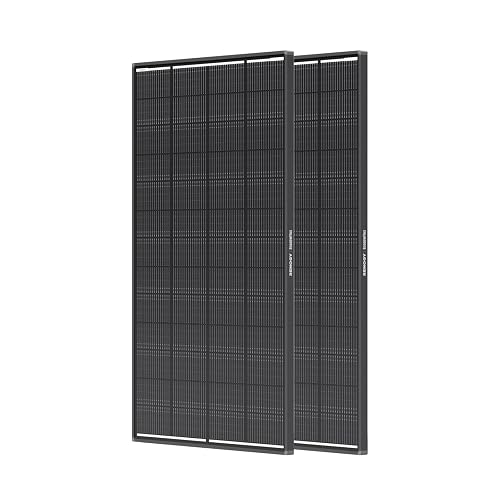 TOP CHOICEBest for partial shadeRenogy ShadowFlux Solar Panel 400 WattView on Amazon
- 3
 TOP CHOICEBest for small roofsRenogy ShadowFlux Solar Panel 120 WattView on Amazon
- 4
 Best for a higher-output build4PCS 320W Solar Panels Renogy N-Type 18BBView on Amazon
- 5
 Best for 12V and backup systems16BB High Efficiency Monocrystalline PV Modules 200 WattView on Amazon
Our Top Picks
Quick Comparison
| Product | Best for | Key feature |
|---|---|---|
| ExpertPower 4pcs 540W Bifacial | Overall pergola builds | Bifacial half-cut design |
| Renogy 4PCS 320W N-Type | Higher total output | IP68 rated, 25% efficiency |
| 16BB Monocrystalline PV Modules | 12V and backup systems | TÜV-certified modules |
| Renogy ShadowFlux 400 Watt | Partially shaded structures | Shade-tolerant cell layout |
| Renogy ShadowFlux 120 Watt | Small or lightweight frames | Compact, low-weight module |
ExpertPower 4pcs 540W Bifacial Solar Panels
ExpertPower 4pcs 540W Bifacial Solar Panels: Monocrystalline, High Efficiency Half-Cut Design for On/Off-Grid Flat Roof, Pergola, Farm, Yacht, Charging & Off-Grid Applications
Best for: Overall pergola builds with enough roof area for multiple panels.
This kit suits homeowners who want a substantial array across an open pergola top and can handle the extra weight that comes with larger modules. The bifacial design can pick up some reflected light from below, which owners often mention on shaded patios.
Pros
- High output per module for the footprint
- Half-cut cells help with partial shading
Cons
- Heavier, so the pergola frame needs checking first
4PCS 320W Solar Panels Renogy N-Type 18BB
4PCS 320W Solar Panels for Homes Rooftops Farms yards sheds Off-Grid Systems, Efficient Power in Less Space, IP68 Renogy Solar Panels 1280 Watt N-Type 18BB, 25% High-Efficiency
Best for: Higher total output in a compact area.
Suited to owners who want more power from limited roof space, with an IP68 rating that manufacturers specify for water and dust resistance. It works well where the pergola top is a regular rectangle.
Pros
- N-type cells with a stated 25% efficiency
- IP68 rating for weather exposure
Cons
- Adds more weight than smaller modules
16BB High Efficiency Monocrystalline PV Modules 200 Watt
16BB High Efficiency Monocrystalline PV Modules for 12V Systems, RVs, Rooftop, Farms, Cabins, Off-Grid Solar, Backup Power 1200W TÜV Certification Solar Panel, 6PC 200 Watt N-Type 25.8% Solar Panels
Best for: 12V and backup power systems.
This option fits owners building a small battery-based system to run lights, fans or a charger from a pergola. Listings describe a TÜV certification, which is a third-party safety and quality mark.
Pros
- Designed for 12V battery systems
- Listed with TÜV certification
Cons
- Lower total output than the larger kits
Renogy ShadowFlux Solar Panel 400 Watt
2PCS 200W Solar Panels for RV Marine Rooftop Home, Optimized for Partial Shading from Trees, Roofs, Buildings, Leaves & Snow Renogy ShadowFlux Solar Panel 400 Watt, N-Type 25% High-Efficiency
Best for: Pergolas partly covered by trees, leaves or nearby structures.
The ShadowFlux design is built to keep producing when parts of the module are shaded, which matters under climbing vines or leafy canopies. Owners with mixed shade often report steadier output than with standard panels.
Pros
- Built to tolerate partial shading
- Higher output in a single module
Cons
- Larger module needs a sturdy mounting rail
Renogy ShadowFlux Solar Panel 120 Watt
120W Solar Panel for RV Marine Rooftop Home, Optimized for Partial Shading from Trees, Roofs, Buildings, Leaves & Snow Renogy ShadowFlux Solar Panel 120 Watt, N-Type 25% High-Efficiency
Best for: Small or lightweight pergola frames.
A smaller module is easier to lift and mount on narrow or older wooden frames. It also suits a first experiment before committing to a bigger array.
Pros
- Light and easy to handle alone
- Same shade-tolerant design as larger ShadowFlux models
Cons
- Limited output for larger loads
Buying Guide
Panel weight and frame load
Pergolas are often built from light lumber or metal that was never designed to carry a roof-mounted array. Check the frame rating and the module weight before you buy, and add a margin for snow and wind.
Shade tolerance
Overhead vines, neighboring trees and the pergola’s own beams can cast moving shadows. Panels with shade-tolerant cell layouts usually lose less output when only part of a module is covered.
Electrical system match
Choose panel voltage and output to match your charge controller and battery bank. A 12V battery system and a grid-tied setup need very different modules.
Good picks for this: 16BB High Efficiency Monocrystalline PV Modules and Renogy ShadowFlux Solar Panel 120 Watt
Mounting and wiring access
Leave room for cable runs and an accessible junction point. Mounting hardware should be rated for the panel’s wind and load specifications.
FAQ
Can solar panels really be mounted on a pergola roof?
Yes, many people mount panels on pergola roofs, but the frame has to handle the added weight and wind load. Check that the rafters and posts are sturdy enough and that the panels are secured with proper brackets. If you are unsure, have a contractor review the structure before installing.
Which panel type works best if part of my pergola is shaded?
Panels designed for partial shade, such as the ShadowFlux models, are generally the better choice when leaves, nearby trees, or building edges cast shadows over parts of the roof. These designs are built to limit how much output drops when only a section of the panel is shaded. Full sun exposure will still give you the most power overall.
Do I need a special charge controller or inverter for a pergola setup?
Most pergola systems need a charge controller to regulate power going to a battery, and an inverter if you plan to run standard household appliances. The right size depends on the total wattage of the panels and the voltage of your battery system. Matching the components to your panels is an important step before wiring anything together.
Are bifacial panels worth it for a pergola?
Bifacial panels can capture some light reflected from the surface beneath them, which can add a bit of extra output when the area below is bright or light-colored. Because a pergola is open and airy, this can be an advantage, but the gain depends heavily on what sits under the panels. Consider your ground surface and sun exposure when deciding whether bifacial design is worth the cost.
How do I know how many panels my pergola can hold?
Start by measuring the usable roof area and the weight capacity of the frame, then compare those numbers with each panel’s dimensions and weight. Leave room for airflow and drainage, and avoid overloading any single support post. Keeping a safety margin on load limits is always wise.
Do I need a permit to install solar panels on a pergola?
Requirements vary by city, county, and homeowners association, so it is worth checking with your local building or planning office before installing. Some areas require permits for structural changes or electrical work, even on small backyard installations. A quick call upfront can save you trouble later.
Conclusion
If you want the most output and have a clear, unshaded pergola roof with a sturdy frame, the larger bifacial kit is the strongest all-around choice. If trees, leaves, or nearby buildings cast shadows, the ShadowFlux models are better suited to keeping performance steady, with the 400 Watt option for more power and the 120 Watt option for a lighter, smaller setup.
For smaller pergolas, lighter loads, or a modest power goal, the 200 Watt and 320 Watt options offer a practical middle ground. Match the panel size to your frame’s weight capacity, your shade conditions, and the electrical system you plan to use, and you will be well positioned for a reliable installation.
Related reading
- What Is the Cost of Roof Solar Panels? A Homeowner's Q&A
- What Are Solar Thermal Roof Panels and Do They Work for Homes?
- What Are Roof Integrated Solar Thermal Panels and Do They Work?
About Claire Whitaker
Claire Whitaker is part of our editorial team and reviews and edits our home solar guides, checking product details against manufacturer specifications and owner feedback.