By Claire Whitaker
Updated November 2026
Choosing solar electric roof panels for a house can feel harder than it should. Panel wattage, cell type, efficiency, and whether a product suits a grid-tied or off-grid setup all affect the result, and spec sheets rarely explain what matters. This guide compares six panels that are widely sold to homeowners and small DIY builders. We focused on the published specifications, the reputation of each brand, and the patterns owners tend to report about durability, output, and ease of mounting. We have not tested these panels ourselves, so treat the notes below as a starting point and check the manufacturer’s documentation before you buy.
Our top picks at a glance
- 1
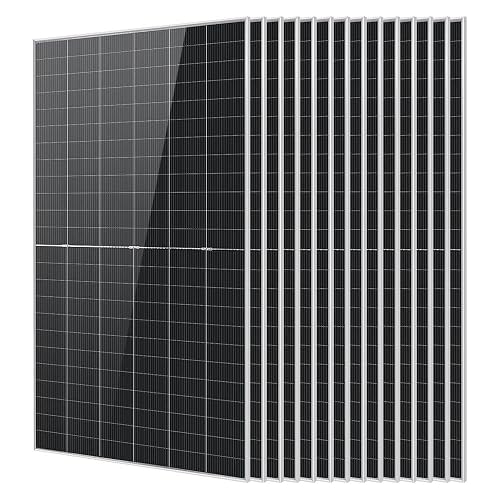 TOP CHOICEBest overallSUNGOLDPOWER 590W Bifacial Solar Panel 14PCSView on Amazon
- 2
 TOP CHOICEBest for small roofsN-Type 16BB 400W Bifacial Solar Panel, 2Pcs 200 Watt Solar PanelView on Amazon
- 3
 TOP CHOICEBest for dual-module setups450W Bifacial Solar Panel 2-Pack (900W Total)View on Amazon
- 4
 Best budget pickECO-WORTHY 200 Watts 12 Volt/24 Volt Solar Panel KitView on Amazon
- 5
 Best for roof installation helpSPH-250 Electric Motor Powered Material HoistView on Amazon
- 6
 Best for high-output systems990W Bifacial Solar Panel 25.6% High-Efficiency 16BB MonocrystallineView on Amazon
Our Top Picks
Quick Comparison
| Product | Best for | Key feature |
|---|---|---|
| SUNGOLDPOWER 590W Bifacial Solar Panel 14PCS | Whole-home arrays with battery backup | 14 panels rated 590W each, 24V/48V compatible |
| N-Type 16BB 400W Bifacial Solar Panel 2Pcs | Small roofs and RV or van rooftops | Two-module parallel design for shade tolerance |
| 450W Bifacial Solar Panel 2-Pack (900W Total) | Mid-size home rooftops | Double-glass construction, 900W combined |
| ECO-WORTHY 200W 12V/24V Solar Panel Kit | Entry-level off-grid projects | Included 30A PWM charge controller |
| SPH-250 Electric Motor Powered Material Hoist | Lifting panels onto steep roofs | 250 lb capacity electric hoist |
| 990W Bifacial Solar Panel 25.6% High-Efficiency | High-output roof systems | 25.6% efficiency with IP68 rating |
SUNGOLDPOWER 590W Bifacial Solar Panel 14PCS
SUNGOLDPOWER 590W Bifacial Solar Panel 14PCS,N-Type 16BB,High Efficiecy Up to 30% Extra Power,Vmp 44.4V/PCS,for 24V/48Vdc Home Backup,Energy Storage,On Grid/Off-Grid System UL61730 (14*590W Bifacial)
Best for: Whole-home arrays with battery backup
This kit suits homeowners planning a full roof array who want a large combined output. The listing describes compatibility with both on-grid and off-grid systems, which gives flexibility if you add storage later. If you want more background, see Solar Panel Mounting Options: Ground, Pole, Roof and Portable.
Key specs
- Panel rating: 590W each, 14 pieces
- Cell type: N-type, 16BB
- Voltage (Vmp): 44.4V per panel
- Certification: UL61730, as stated in the listing
Pros
- High combined capacity for a whole-roof array
- Bifacial design can capture reflected light
- Works with 24V and 48V home systems
Cons
- Requires a sizable roof area and a qualified electrician for wiring
- Heavy to handle, so a lifting tool is advisable
Bottom line: Best for homeowners planning a complete rooftop system with battery storage and enough roof space for many panels.
N-Type 16BB 400W Bifacial Solar Panel, 2Pcs 200 Watt Solar Panel
N-Type 16BB 400W Bifacial Solar Panel, 2Pcs 200 Watt Solar Panel for 12V/24V Systems, 25.6% High Efficiency, Dual-Module Parallel Anti-Shade Design, for RV Van Marine Home Rooftop Off-Grid
Best for: Small roofs and RV or van rooftops
This two-panel package is aimed at people with limited roof space or mobile setups. The parallel design is meant to keep output steadier when part of a panel is shaded.
Key specs
- Panel count: 2 pieces
- Listed efficiency: 25.6%
- Designed for 12V and 24V systems
Pros
- Compact footprint suits small roofs
- Dual-module parallel design helps with partial shade
- Useful for both home and mobile applications
Cons
- Lower total output than larger home arrays
- Needs a compatible charge controller and battery bank
Bottom line: A good match for small homes, sheds, and RV owners who want a modest, flexible setup.
450W Bifacial Solar Panel 2-Pack (900W Total)
450W Bifacial Solar Panel 2-Pack (900W Total), N-Type 16BB Monocrystalline, Double-Glass, Dual-Module Parallel Anti-Shade Design, 25.6% Efficiency, for Home Rooftops, RVs, Off-Grid Systems
Best for: Mid-size home rooftops
This pack offers a middle ground between a small kit and a full-roof array. The double-glass construction is the feature most often highlighted for longevity.
Key specs
- Total output: 900W across two 450W panels
- Cell type: N-type 16BB monocrystalline
- Glass: double-glass construction
Pros
- Double-glass design is generally associated with better durability
- Good balance of output and footprint
- Suitable for home rooftops and off-grid use
Cons
- Brand reputation is less established than some larger manufacturers
- Mounting hardware may need to be sourced separately
Bottom line: Suits homeowners with a moderate roof area who want around 900W without building a very large array.
ECO-WORTHY 200 Watts 12 Volt/24 Volt Solar Panel Kit
ECO-WORTHY 200 Watts 12 Volt/24 Volt Solar Panel Kit with High Efficiency Monocrystalline Solar Panel and 30A PWM Charge Controller for RV, Camper, Vehicle, Caravan and Other Off Grid Applications
Best for: Entry-level off-grid projects
This kit is among the more accessible ways to start with solar. It bundles panels with a charge controller, which simplifies the first build for beginners.
Key specs
- Panel rating: 200W total
- Voltage: 12V and 24V systems
- Controller: 30A PWM charge controller included
Pros
- Includes a charge controller, reducing guesswork
- Lower output requirements make it easy to start small
- Well suited to RV, shed, and cabin use
Cons
- PWM controllers are less efficient than MPPT types in many conditions
- Output is too small to power a whole house
Bottom line: A sensible starting point for someone testing solar on a small scale or powering a secondary structure.
SPH-250 Electric Motor Powered Material Hoist
SPH-250 Electric Motor Powered Material Hoist laddervator 250lbs Capacity Solar Panel Roof Hoist Shingle Hoist
Best for: Lifting panels onto steep roofs
This is a lifting tool rather than a panel, but it addresses one of the most common DIY problems: getting heavy panels safely up a ladder or roof edge. It is included here because roof installs often depend on reliable hoisting.
Key specs
- Rated capacity: 250 lbs
- Type: electric motor powered
- Intended use: material hoisting, including roof panels and shingles
Pros
- Reduces manual lifting on steep or multi-story roofs
- Rated capacity suits most residential panels
- Useful for shingles and other roofing materials too
Cons
- Requires secure anchoring and careful setup to be safe
- Adds setup time and equipment to a project
Bottom line: Worth considering for anyone installing several heavy panels on a steep roof and wanting less physical strain.
990W Bifacial Solar Panel 25.6% High-Efficiency 16BB Monocrystalline
990W Bifacial Solar Panel 25.6% High‑Efficiency 16BB Monocrystalline 48V/24V, Reliable Power for RV/Marine/Roof, IP68 STAR 990W Bifacial Solar Panel, 2PCS 495W UL61730 N-Type Solar Panels
Best for: High-output roof systems
This listing targets buyers who want maximum output from limited roof area. The efficiency figure and IP68 rating are the main selling points described.
Key specs
- Total output: 990W across two 495W panels
- Listed efficiency: 25.6%
- Cell type: monocrystalline, 16BB, N-type
- Rating: IP68 as stated in the listing
Pros
- High output per square foot of roof
- Efficiency rating suits space-limited installs
- Bifacial design may add some reflected-light gain
Cons
- Higher output means higher system complexity and wiring requirements
- Requires compatible inverter and battery capacity to use the full output
Bottom line: Best for homeowners who need as much power as possible from a fixed roof area and have the electrical planning to match.
Buying Guide
Panel wattage and total system output
Wattage tells you how much power a panel can produce under standard test conditions. To size a system, multiply panel wattage by the number of panels, then account for real-world losses from heat, dust, and angle. Many installers apply a derate factor in the range of 75 to 85 percent when estimating daily output, though local sun hours matter more than any single number.
Good picks for this: SUNGOLDPOWER 590W Bifacial Solar Panel 14PCS, 990W Bifacial Solar Panel 25.6% High-Efficiency For another angle, check out Top 5 Roof Racks for Solar Panels Compared for Homeowners.
Cell type and efficiency
Monocrystalline cells, including N-type designs, generally offer higher efficiency than older polycrystalline cells. Efficiency matters most when roof space is limited, because a more efficient panel produces more power per square foot.
Good picks for this: N-Type 16BB 400W Bifacial Solar Panel 2Pcs, 450W Bifacial Solar Panel 2-Pack
Voltage compatibility
Check whether a panel or kit matches your battery bank and charge controller. Common home and RV systems run at 12V, 24V, or 48V. A mismatch can damage equipment or waste capacity, so confirm voltage before purchase.
Good picks for this: ECO-WORTHY 200 Watts 12 Volt/24 Volt Solar Panel Kit, SUNGOLDPOWER 590W Bifacial Solar Panel 14PCS
Size and fit for your roof
Measure usable roof area before buying. Panels are typically sized in feet or meters, and you need clearance for mounting rails, setback from roof edges, and access paths. Overhangs, vents, and skylights reduce usable space.
Good picks for this: N-Type 16BB 400W Bifacial Solar Panel 2Pcs, 450W Bifacial Solar Panel 2-Pack
Durability and weather resistance
Look for ratings such as IP68 and double-glass construction, which are often associated with resistance to moisture and mechanical stress. Panels on roofs face wind loads, hail, and seasonal temperature swings, so a robust frame and glass matter over a 25-year life.
Good picks for this: 450W Bifacial Solar Panel 2-Pack, 990W Bifacial Solar Panel 25.6% High-Efficiency
Installation equipment and safe handling
Roof work is where most DIY accidents happen. Heavy panels, steep pitches, and ladder work all add risk. Lifting aids, harnesses, and fall protection reduce that risk. Panels should always be installed with proper racking and grounding.
Good picks for this: SPH-250 Electric Motor Powered Material Hoist, ECO-WORTHY 200 Watts 12 Volt/24 Volt Solar Panel Kit
Intended use case
Grid-tied homes, off-grid cabins, and mobile RV setups have different needs. Grid-tied systems often prioritize maximum output, while off-grid systems depend on battery sizing and daily energy use. Match the panel to your actual load, not just the roof size.
Good picks for this: ECO-WORTHY 200 Watts 12 Volt/24 Volt Solar Panel Kit, N-Type 16BB 400W Bifacial Solar Panel 2Pcs
FAQ
Can I install solar electric roof panels myself?
Some homeowners do their own mounting, but wiring a system that connects to your home electrical panel usually requires a licensed electrician and often a permit. Check local rules and utility requirements before starting. Consult a professional for any work involving grid connection.
How many panels do I need for a typical home?
It depends on your monthly kilowatt-hour use, local sun hours, and panel wattage. A rough estimate divides annual use by the expected yearly output per panel. A solar installer or a free sizing calculator from a national lab can give you a more accurate figure.
Are bifacial panels better than standard panels?
Bifacial panels can capture light on both faces, which may add output when they are mounted over a reflective surface or raised off the roof. On a standard dark roof, the gain is often smaller. They are not automatically better, so compare total output and mounting conditions.
What does efficiency percentage actually mean?
Efficiency describes the share of sunlight hitting the panel that becomes electricity. A higher percentage means more output from the same area, which matters most when roof space is limited. It does not guarantee more total energy if the panel is poorly installed or shaded.
Do I need a charge controller or inverter?
Off-grid and battery systems need a charge controller to regulate power going into the batteries. Grid-tied systems need an inverter to convert DC power from the panels into AC power for your home. Many kits include a controller, but inverters are often sold separately.
How long do solar roof panels last?
Manufacturers commonly specify performance warranties of around 25 years, with output gradually declining over time. Actual lifespan depends on climate, installation quality, and maintenance. Review each product’s warranty terms before buying.
Conclusion
There is no single best option for every roof. The large SUNGOLDPOWER kit fits homeowners building a full array with storage, while the two-panel N-Type package suits small roofs and mobile setups. The 450W two-pack offers a balanced middle ground, the ECO-WORTHY kit is a practical entry point for off-grid projects, and the 990W panel serves those who need maximum output from limited space. The SPH-250 hoist is a useful addition if roof lifting is your main challenge. Start by measuring your roof, estimating your energy needs, and confirming voltage compatibility before you buy.
For background on related decisions, you may find What Is the Best Roof Angle for Solar Panels? 6 Mounts Compared (2026) and What Is the Cost of Roof Solar Panels? A Homeowner's Q&A helpful. If you are weighing roof options against other mounting locations, Why Not to Put Solar Panels on Roof? 5 Alternatives Compared (2026) covers the trade-offs, and Top 6 Lightweight Solar Panels for Roof Installs Compared (2026) looks at lighter options for weight-sensitive roofs.
Sources
- Guidance on residential solar basics, system components, and how to evaluate installers (energy.gov)
- Research and calculators for estimating solar output and system sizing (nrel.gov)
- Safety certification standards, including the UL 61730 photovoltaic module standard (ul.com)
About Claire Whitaker
Claire Whitaker is part of our editorial team and reviews and edits our home solar guides, checking product details against manufacturer specifications and owner feedback.