By Claire Whitaker
Updated November 2026
Small roof solar panels are a practical choice when a full-size array will not fit: a camper van roof, a boat cabin, a shed, a garage with a short rafter run, or a home roof broken up by vents and skylights. Readers searching this topic usually want to know which panels deliver useful wattage without overloading the roof, which ones handle partial shade, how they pair with a charge controller, and whether a kit or a standalone panel makes more sense. The selection criteria here were power per square foot, weight, shade tolerance, compatibility with common 12V and 24V systems, weather rating, and the kind of owner feedback that tends to appear in RV and off-grid forums.
Our top picks at a glance
- 1
 TOP CHOICEBest overallN-Type 16BB 400W Bifacial Solar Panel, 2Pcs 200 Watt Solar Panel for 12V/24V SystemsView on Amazon
- 2
 TOP CHOICEBest budget pickECO-WORTHY 200 Watts 12 Volt/24 Volt Solar Panel KitView on Amazon
- 3
 TOP CHOICEBest for tight van roofsRenogy 200W Solar Panel for RV, Upgraded Smaller and Lighter DesignView on Amazon
- 4
 Best for high-output systemsSTAR 990W Bifacial Solar Panel, 2PCS 495W UL61730 N-Type Solar PanelsView on Amazon
- 5
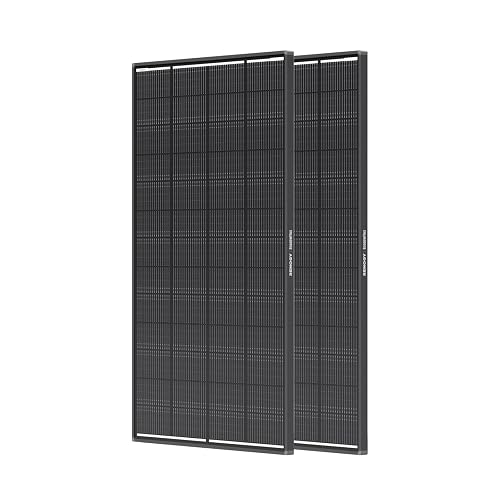 Best for partial shadeRenogy ShadowFlux Solar Panel 400 Watt, N-Type 25% High-EfficiencyView on Amazon
- 6
 Best for curved roofsRenogy Flexible Solar Panel 100 Watt, 240° Ultra Flex BendableView on Amazon
- 7
 Best semi-flexible option200W Flexible Solar Panel for RV, Semi-Flexible Monocrystalline, 2.5mm PET PanelView on Amazon
Our Top Picks
Quick Comparison
| Product | Best for | Key feature |
|---|---|---|
| N-Type 16BB 400W Bifacial Solar Panel, 2Pcs 200 Watt | Best overall | Dual-module parallel anti-shade design |
| ECO-WORTHY 200W Solar Panel Kit | Best budget pick | Included 30A PWM charge controller |
| Renogy 200W Solar Panel for RV | Best for tight van roofs | Compact, lighter profile |
| STAR 990W Bifacial Solar Panel | Best for high-output systems | 990W total output, IP68 rating |
| Renogy ShadowFlux Solar Panel 400W | Best for partial shade | Shade-optimized cell layout |
| Renogy Flexible Solar Panel 100W | Best for curved roofs | Bendable, 0.1 inch thickness |
| 200W Flexible Solar Panel (PET, MC4) | Best semi-flexible option | 2.5mm PET panel for curved surfaces |
N-Type 16BB 400W Bifacial Solar Panel, 2Pcs 200 Watt Solar Panel for 12V/24V Systems
N-Type 16BB 400W Bifacial Solar Panel, 2Pcs 200 Watt Solar Panel for 12V/24V Systems, 25.6% High Efficiency, Dual-Module Parallel Anti-Shade Design, for RV Van Marine Home Rooftop Off-Grid
Best for: Best overall
This two-module set suits owners who want a flexible total wattage on a modest roof footprint and who may later add or rearrange panels. Running the modules in parallel helps limit the effect of a shaded cell on the whole string.
Key specs
- Two 200W modules (400W combined listing)
- N-type 16BB cell design
- Stated efficiency of 25.6%
- Compatible with 12V and 24V systems
Pros
- Parallel dual-module layout handles partial shading better than a single large panel
- Efficient cells deliver more watts per square foot
- Works across common 12V and 24V battery banks
Cons
- Two modules mean two mounting footprints and more wiring to plan
- Bifacial design gains little on a dark, low-reflectance roof surface
Bottom line: A strong first choice for RV, van or cabin owners who want headroom for future expansion and good shade resilience.
ECO-WORTHY 200 Watts 12 Volt/24 Volt Solar Panel Kit
ECO-WORTHY 200 Watts 12 Volt/24 Volt Solar Panel Kit with High Efficiency Monocrystalline Solar Panel and 30A PWM Charge Controller for RV, Camper, Vehicle, Caravan and Other Off Grid Applications
Best for: Best budget pick
Owners who want a complete starting point, panels plus controller, without sourcing components separately. It fits small RV, camper and utility-trailer setups where daily loads are modest.
Key specs
- 200W monocrystalline panel
- 12V/24V compatible
- 30A PWM charge controller included
Pros
- Kit format removes guesswork about controller matching
- Monocrystalline construction is a well-established, durable panel type
- Straightforward for first-time off-grid installs
Cons
- PWM controllers are less efficient than MPPT in cold or low-light conditions
- Kit controller may need upgrading as the system grows
Bottom line: A sensible entry point for someone building their first small off-grid roof system on a limited budget.
Renogy 200W Solar Panel for RV, Upgraded Smaller and Lighter Design
200W Solar Panel for RV, Upgraded Smaller & Lighter Design, Save Space on Class B Van, Marine, Boat, Trailer, Roof, IP67 Renogy Solar Panels 200 Watt N-Type, 16BB 25% High-Efficiency
Best for: Best for tight van roofs
Built with a smaller, lighter frame for Class B vans, boats and trailers where roof space and load limits matter. It suits owners who need 200W without a large footprint. A related read: Clearing Snow Off Solar Panels on Roof: 4 Best Roof Rakes Compared.
Key specs
- 200W output
- N-type, 16BB cell design
- Stated 25% efficiency
- IP67 rating listed
Pros
- Compact footprint fits narrow roof sections
- Lighter than many older-generation 200W panels
- N-type cells perform well in warm conditions
Cons
- Smaller panel area means less total energy per day
- Mounting hardware is usually sold separately
Bottom line: Best for van and boat owners whose roof is the limiting factor, not their energy target.
STAR 990W Bifacial Solar Panel, 2PCS 495W UL61730 N-Type Solar Panels
990W Bifacial Solar Panel 25.6% High‑Efficiency 16BB Monocrystalline 48V/24V, Reliable Power for RV/Marine/Roof, IP68 STAR 990W Bifacial Solar Panel, 2PCS 495W UL61730 N-Type Solar Panels
Best for: Best for high-output systems
For larger RV, cabin or shed roofs where owners want close to a kilowatt of nameplate capacity from a set of panels. It assumes a robust mounting plan and a battery bank sized to match.
Key specs
- 990W total (two 495W modules)
- N-type cells, 25.6% stated efficiency
- 48V/24V system compatibility listed
- IP68 rating listed
Pros
- High total output from a compact set of modules
- IP68 rating suits wet and dusty environments
- UL61730 listing is a recognized safety standard
Cons
- Large, heavy modules require a strong roof structure and careful wind loading
- Higher voltage configurations call for experienced wiring
Bottom line: A good match for experienced builders with a sturdy roof and a battery bank that can absorb the output.
Renogy ShadowFlux Solar Panel 400 Watt, N-Type 25% High-Efficiency
2PCS 200W Solar Panels for RV Marine Rooftop Home, Optimized for Partial Shading from Trees, Roofs, Buildings, Leaves & Snow Renogy ShadowFlux Solar Panel 400 Watt, N-Type 25% High-Efficiency
Best for: Best for partial shade
Designed for roofs that receive shade from trees, chimneys, neighboring buildings or snow. It is aimed at owners who cannot avoid partial shading and want the array to keep producing through it.
Key specs
- 400W configuration (2 x 200W listing)
- N-type, 25% stated efficiency
- Shade-optimized layout per manufacturer
Pros
- Shade-tolerant design is the main selling point
- Two-module format limits losses from a single shaded cell
- Fits a range of rooftop and off-grid applications
Cons
- Shade tolerance has limits; heavy shade still cuts output significantly
- Requires confirmed mounting and wiring planning for two modules
Bottom line: The right pick when shade is unavoidable and you want a shade-aware layout from the start.
Renogy Flexible Solar Panel 100 Watt, 240° Ultra Flex Bendable
100W Flexible Solar Panel for for Marine RV Cabin Van Car Boat Curve Surfaces Off-Grid Systems, 0.1 Inch Lightweight, Black Renogy Flexible Solar Panel 100 Watt, 240° Ultra Flex Bendable
Best for: Best for curved roofs
Suited to fiberglass, curved RV and boat roofs where a rigid panel cannot sit flat. It is a lightweight option for owners who value a low profile over maximum output.
Key specs
- 100W output
- Flexible, about 0.1 inch thickness
- Bendable to a stated 240-degree curve
Pros
- Conforms to curved surfaces without a rigid frame
- Very light, reducing roof load
- Low profile keeps wind resistance down
Cons
- Flexible panels typically run cooler-limited and less efficient than rigid panels
- Adhesive mounting requires a clean, prepared surface
Bottom line: The go-to option when the roof shape is the constraint and output expectations are modest.
200W Flexible Solar Panel for RV, Semi-Flexible Monocrystalline, 2.5mm PET Panel
2.5mm PET panel for curved roofs, 21.9% cell efficiency, IP67, 6.94 lb, MC4 output 200W Flexible Solar Panel for RV, Semi-Flexible Monocrystalline
Best for: Best semi-flexible option
For owners who want more wattage than a thin flexible film offers but still need a panel that follows a gentle roof curve. It is a middle path between rigid and fully flexible designs.
Key specs
- 200W listing
- 2.5mm PET laminate
- Stated 21.9% cell efficiency
- IP67 rating and MC4 output connectors listed
- Approximately 6.94 lb listed weight
Pros
- Higher output than most flexible panels of similar size
- Light enough for lightweight roof structures
- MC4 connectors simplify standard wiring
Cons
- Semi-flexible laminates can be less durable than glass-faced panels under foot traffic
- Limited curvature compared with fully flexible options
Bottom line: A balanced choice for owners who need real wattage on a gently curved or lightweight roof.
Buying Guide
Wattage and Roof Area
Measure the usable roof area first, not the full roof. Subtract vents, skylights, ladders and clearance around edges. Small panels typically range from around 100W to 400W per module, and most owners do better planning total wattage against a realistic daily energy target than chasing the largest number on a spec sheet.
Good picks for this: N-Type 16BB 400W Bifacial Solar Panel; ECO-WORTHY 200W Solar Panel Kit
Weight and Roof Load
Panel weight matters on RVs, sheds and older residential roofs. Compare listed weights against your roof structure and mounting system. Lightweight and flexible options reduce structural stress but may trade off durability and output.
Good picks for this: Renogy 200W Solar Panel for RV; Renogy Flexible Solar Panel 100W
Shade Tolerance
Partial shade from trees, chimneys or snow can cut output sharply in a standard series string. Look for multi-module or shade-optimized designs if shading is unavoidable.
Good picks for this: Renogy ShadowFlux Solar Panel 400W; N-Type 16BB 400W Bifacial Solar Panel
Cell Type and Efficiency
N-type and monocrystalline cells are widely used in current small panels and generally offer higher efficiency than older polycrystalline designs. Efficiency matters most when roof space is the limit. Check the stated efficiency and whether it is a listing claim or a verified figure.
Good picks for this: STAR 990W Bifacial Solar Panel; Renogy 200W Solar Panel for RV
Voltage Compatibility and Controller Pairing
Confirm that the panel voltage and the charge controller match your battery bank, typically 12V or 24V. PWM controllers are simpler and lower cost, while MPPT controllers extract more energy in cool or low-light conditions. A kit can take the guesswork out of pairing.
Good picks for this: ECO-WORTHY 200W Solar Panel Kit; STAR 990W Bifacial Solar Panel
Mounting Surface and Flexibility
Rigid framed panels need rails and fasteners that suit your roof material. Flexible and semi-flexible panels can be adhesive-mounted but need a clean, properly prepared surface and enough curvature tolerance. Confirm the bend radius before buying.
Good picks for this: Renogy Flexible Solar Panel 100W; 200W Flexible Solar Panel for RV, Semi-Flexible
Weather Rating and Durability
Check the ingress protection rating, commonly IP65, IP67 or IP68, which describes resistance to dust and water. Look for recognized safety certification such as UL61730 on the listing. Durability matters more on roofs exposed to salt spray, heavy snow or constant vibration.
Good picks for this: STAR 990W Bifacial Solar Panel; 200W Flexible Solar Panel for RV, Semi-Flexible
FAQ
How much power can a small roof solar panel produce?
Output depends on panel wattage, sun hours, tilt, shade and system losses. A 200W panel in good sun often produces a usable daily amount for small loads, but the exact figure varies by location and season. Use local sun-hour data to estimate realistically.
Can I use these panels with a 12V or 24V battery system?
Most listed panels here are sold for 12V or 24V applications, but the controller and battery bank must match. Confirm the system voltage before wiring, and do not connect a panel that exceeds the controller’s maximum input voltage.
Are flexible panels as durable as rigid panels?
Generally, no. Flexible laminates usually have shorter expected lifespans and are more vulnerable to foot traffic and abrasion than glass-faced rigid panels. Owners often report good results when the panel is kept clean and not walked on.
Does partial shade ruin small solar panels?
Shade reduces output, and in a standard series string a shaded cell can cut the whole panel’s production. Multi-module layouts and shade-optimized designs reduce this effect but do not eliminate it.
Do I need a charge controller?
For battery systems, yes. A charge controller regulates voltage to protect batteries from overcharging. Kits often include one; standalone panels require a separate PWM or MPPT controller sized to the array.
Is it safe to install solar panels on my own roof?
Roof work carries fall and electrical risks. Consult a licensed electrician or qualified solar installer, particularly for grid-tied systems or any wiring that connects to your home electrical panel.
Conclusion
Small roof solar panels can deliver meaningful power when the roof is the limit. For most readers, the N-Type 16BB 400W Bifacial pair offers the best balance of output and shade resilience. The ECO-WORTHY kit suits first-time builders who want included components. The compact Renogy 200W fits narrow van and boat roofs, while the STAR 990W serves larger, sturdier installs. Shade-prone roofs point toward the Renogy ShadowFlux, curved roofs toward the flexible 100W, and semi-flexible needs toward the 200W PET panel. Match the pick to your roof structure, shading and battery system before buying.
Sources
- Federal guidance on residential solar system basics, sizing and incentives (energy.gov)
- Research data on solar resource, panel performance and shading effects (nrel.gov)
- Safety certification standards and listings relevant to photovoltaic modules (ul.com)
Related reading
- Top 5 Solar Panels for Shed Roof UK: Compared for Small Installs
- Why Not to Put Solar Panels on Roof? 5 Alternatives Compared (2026)
- Which Roof Is Best for Solar Panels? 5 Top Picks Compared (2026)
- What Is the Cost of Roof Solar Panels? A Homeowner's Q&A
- What Is the Best Roof Angle for Solar Panels? 6 Mounts Compared (2026)
- What Color Roof Is Best for Solar Panels? 5 Top Picks Compared (2026)
- What Are Solar Thermal Roof Panels and Do They Work for Homes?
- What Are Roof Integrated Solar Thermal Panels and Do They Work?
About Claire Whitaker
Claire Whitaker is part of our editorial team and reviews and edits our home solar guides, checking product details against manufacturer specifications and owner feedback.