By Claire Whitaker
Updated November 2026
Homeowners searching for sunpower solar panel cost usually want to know one thing: which SunPower-style option gives them the most usable output for the money, without the premium pricing of a full installed system. This guide compares three cell and panel products that are commonly used in DIY and portable setups. Our selection criteria were product specifications, brand reputation, and the patterns owners tend to report about build quality, wiring, and output. We did not test these products ourselves, so treat the specs below as manufacturer-stated and check them against your own needs.
Best overall: SUNPOWER Portable Solar Panels – View on Amazon
Best for DIY panel builders: Sunpower Flexible Mono Solar Wafer (30 pack) – View on Amazon
Best budget pick: Sunpower Flexible Solar Cells E60 C60 (10 pack) – View on Amazon
Our Top Picks
Quick Comparison
| Product | Best for | Key feature |
|---|---|---|
| SUNPOWER Portable Solar Panels (100W) | Camping, boats, RVs | Flexible panel with MC4 connectors |
| Sunpower Flexible Mono Solar Wafer (30 pack) | Building your own panels | Monocrystalline cells with tabbing-ready design |
| Sunpower Flexible Solar Cells E60 C60 (10 pack) | Small DIY projects on a budget | 3.6W cells without busbars |
SUNPOWER Portable Solar Panels (100W)

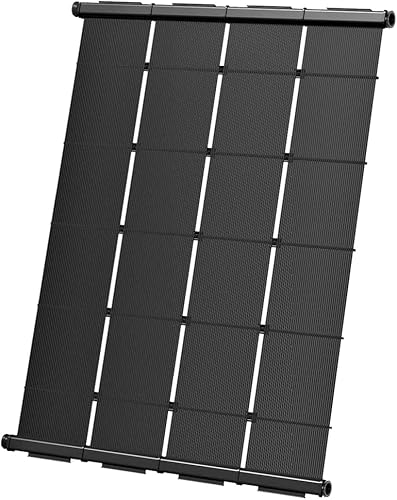
SUNPOWER Portable Solar Panels, Flexible Panel / Monocrystalline Cells / Lightweight/ MC4 Connectors Camping, boats, RV + more (100W)
Best for: Portable power for outdoor use
This is the most finished product of the three. It is a ready-to-use flexible panel rather than a bag of raw cells, which makes it the simplest route for someone who wants power on the go without assembling anything. It suits campers, boaters, and RV owners who need a single panel to charge batteries or small devices.
Key specs
- Rated output: 100W (as stated in the listing name)
- Monocrystalline cells
- Flexible, lightweight construction
- MC4 connectors
Pros
- Ready to connect with no assembly required
- Lightweight enough to move between locations
- MC4 connectors work with common charge controllers and cabling
Cons
- Flexible panels generally have a shorter outdoor lifespan than rigid glass-faced modules
- Less output per square foot than a rigid residential panel
Bottom line: Choose this if you want a finished portable panel for camping, boats, or an RV and do not plan to build anything yourself.
Sunpower Flexible Mono Solar Wafer (30 pack)

Sunpower New Solar Cell Flexible Mono Solar Wafer Monocrystalline Cells Tabbing for DIY Solar Panel High Efficiency 3.4W C60 5×5 Safe Packing (30)
Best for: Building your own panels from individual cells
This is a bulk supply of small monocrystalline wafers intended for people who plan to tab, string, and laminate their own modules. It fits hobbyists and experienced DIYers who want control over panel size and layout, and who are comfortable handling fragile cells.
Key specs
- Pack size: 30 cells (per listing name)
- Monocrystalline cells rated at 3.4W each (per listing name)
- Cell format listed as C60 5×5
Pros
- Lets you size a panel exactly to your space and load
- Monocrystalline cells are a widely used, well-understood technology
- Bulk quantity suits multi-panel projects
Cons
- Cells are fragile and easily cracked during soldering or handling
- Requires tabbing wire, flux, a soldering setup, and a laminating or framing plan
Bottom line: A good fit for a confident DIYer building a custom panel array rather than buying a finished module.
Sunpower Flexible Solar Cells E60 C60 5×5 3.6W (10 pack)

Sunpower Flexible Solar Cells E60 C60 5×5 3.6W Monocrystalline Cells for DIY Panels (10, No Busbars)
Best for: Small budget DIY projects
This is a smaller lot of cells aimed at people testing a first DIY panel or building a small charger. It makes sense for a single small project, such as a garden light or a phone-charging panel, where you want to learn the process before committing to a larger array.
Key specs
- Pack size: 10 cells (per listing name)
- Monocrystalline cells rated at 3.6W each (per listing name)
- Listed as “No Busbars” for DIY wiring
Pros
- Smaller quantity is practical for a first build
- Higher per-cell rating than the 30-pack listing above
- Good starting point for learning cell handling
Cons
- Limited quantity means small total output
- Still requires soldering, sealing, and mounting know-how
Bottom line: Pick this for a small first project or a learning build, not for powering a home.
Buying Guide
Understand what “sunpower solar panel cost” actually covers
The phrase sunpower solar panel cost can refer to a full installed residential system, a single branded module, or a bag of loose cells. These are very different purchases. Before comparing numbers, decide which category you are shopping in. Installed residential systems include racking, inverters, labor, permits, and interconnection, which none of the products above include. For background on how residential costs are structured, see What Is the Cost of Roof Solar Panels? A Homeowner's Q&A.
Good picks for this: SUNPOWER Portable Solar Panels (100W)
Cell format and wattage per cell
Check the cell format (such as C60 or E60) and the stated wattage per cell. Cells of the same format can still differ in rated output, so make sure your layout math uses the wattage printed in the listing. Multiply cell count by per-cell wattage to estimate total module output before buying. Worth reading next: Plug In Solar Panel Cost: 6 Best Plug-In Solar Kits Compared (2026).
Good picks for this: Sunpower Flexible Mono Solar Wafer (30 pack), Sunpower Flexible Solar Cells E60 C60 (10 pack)
Flexible versus rigid construction
Flexible panels bend, weigh less, and mount on curved or light surfaces, but they usually run hotter and degrade faster than glass-faced rigid modules. Rigid panels are better for permanent roof mounting. Flexible options suit RVs, boats, and temporary setups.
Good picks for this: SUNPOWER Portable Solar Panels (100W)
Your skill level and tools
Building from cells requires soldering flux, tabbing wire, a stable work surface, and patience. If you have never soldered a solar cell, start with a small pack so a mistake does not cost you a large batch.
Good picks for this: Sunpower Flexible Solar Cells E60 C60 (10 pack)
Connectors and compatibility
Check whether a product uses MC4 connectors or bare leads. MC4 connectors are standard for many charge controllers and inverters, which simplifies wiring. Confirm voltage and current limits of your charge controller before connecting any panel.
Good picks for this: SUNPOWER Portable Solar Panels (100W)
Durability and weather exposure
Owners of flexible and cell-based products commonly report that outdoor durability depends heavily on encapsulation and sealing. Unsealed cells are vulnerable to moisture and mechanical stress. If the panel will live outdoors, plan for a protective frame or laminate.
Good picks for this: Sunpower Flexible Mono Solar Wafer (30 pack)
Safety when wiring
Solar panels produce voltage whenever light hits them, so disconnect and cover panels during wiring. Work only with a qualified electrician for any connection to household wiring, and follow local code. Consult a licensed professional before tying any DIY array into your home’s electrical system.
Good picks for this: SUNPOWER Portable Solar Panels (100W), Sunpower Flexible Solar Cells E60 C60 (10 pack)
FAQ
Does “sunpower solar panel cost” mean the price of a full home system?
Not necessarily. Many searchers mean a complete installed residential array, but the products in this list are modules and cells, not complete home systems. A full home system also needs inverters, racking, and labor.
Which option is best for a beginner?
The finished SUNPOWER portable panel is the simplest because it needs no assembly. Building from cells is better suited to people with soldering experience.
How many cells do I need for a useful panel?
It depends on your target wattage and cell rating. Divide your target watts by the per-cell wattage stated in the listing, then add a margin for wiring losses and cell breakage.
Are flexible panels as durable as rigid panels?
Generally, no. Rigid glass-faced modules tend to last longer outdoors. Flexible panels suit mobile uses better than permanent roof mounting.
Do I need a charge controller?
For battery charging, yes. A charge controller regulates voltage and prevents overcharging. Match the controller’s voltage and current ratings to your panel and battery.
Can I connect a DIY panel to my home’s electrical system?
This requires permits, correct inverters, and typically a licensed electrician. Consult a professional before any grid or home connection.
Conclusion
For most readers, the finished SUNPOWER portable panel is the most practical choice if you need power for camping, boats, or an RV. If you want to build your own custom panel and have the soldering skills, the 30-pack of monocrystalline wafers offers the most flexibility. The 10-pack of E60/C60 cells works as a low-commitment first project. None of these products replaces a full installed home system, so match your choice to the scale of power you actually need.
Sources
- Federal guidance on how solar photovoltaic systems work and how to size them (energy.gov)
- Research and data on photovoltaic module performance and cell technologies (nrel.gov)
- Electrical safety standards relevant to solar installations, including the National Electrical Code (nfpa.org)
Related reading
- What Does the Cost of Thermal Solar Panels Look Like for a Home?
- Vivint Solar Panel Cost: What Homeowners Should Expect Before Signing
- Top 5 Solar Panel Removal Cost Calculator Tools for Homeowners
- Top 5 Solar Panel Manufacturing Plant Cost Guides for Homeowners Compared
- Top 5 Solar Panel Installation Cost Estimator Tools Compared (2026)
About Claire Whitaker
Claire Whitaker is part of our editorial team and reviews and edits our home solar guides, checking product details against manufacturer specifications and owner feedback.