By Claire Whitaker
Updated November 2026
Lightweight solar panels for roof use are a practical choice when your structure can’t handle the load of a standard rigid module, or when you want a simpler mount. The picks below were chosen by comparing product listings, manufacturer specifications, brand reputation and common owner feedback. Selection criteria included weight per panel, mounting flexibility, wattage, cell type, waterproof rating and whether the product suits fixed rooftop installs.
Our top picks at a glance
- 1
 TOP CHOICEBest overallN-Type 16BB 400W Bifacial Solar PanelView on Amazon
- 2
 TOP CHOICEBest for curved or uneven surfacesJackery SolarSaga 100W Light Solar PanelView on Amazon
- 3
 TOP CHOICEBest for flexible rooftop mountingECO-WORTHY 200W Flexible HJT Solar PanelsView on Amazon
- 4
 Best for small roofs and budget buildsALLPOWERS SF100 100W Flexible Solar PanelView on Amazon
- 5
 Best for a complete starter kitECO-WORTHY 200 Watts 12V/24V Solar Panel KitView on Amazon
- 6
 Best for compact footprintHQST 200W Solar Panel, N-TypeView on Amazon
- 7
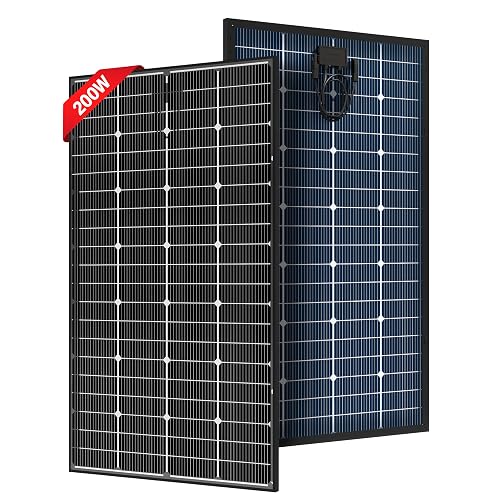 Best for off-grid rigid systemsN-Type 16BB Rigid Solar Module, For RV Home Farm Trailer Camper MarineView on Amazon
Our Top Picks
Quick Comparison
| Product | Best for | Key feature |
|---|---|---|
| N-Type 16BB 400W Bifacial Solar Panel | Overall fit | Bifacial, 25.6% efficiency |
| Jackery SolarSaga 100W Light Solar Panel | Curved or uneven surfaces | Bendable, IP68 rated |
| ECO-WORTHY 200W Flexible HJT Solar Panels | Flexible rooftop mounting | ETFE 18BB flexible design |
| ALLPOWERS SF100 100W Flexible Solar Panel | Small roofs and budget builds | IP68 ETFE waterproofing |
| ECO-WORTHY 200W Solar Panel Kit | Complete starter kit | Includes 30A PWM controller |
| HQST 200W Solar Panel, N-Type | Compact footprint | Small 46.3 x 30.1 inch frame |
| JJN Bifacial 200 Watt Solar Panel | Off-grid rigid systems | Monocrystalline, bifacial design |
N-Type 16BB 400W Bifacial Solar Panel
N-Type 16BB 400W Bifacial Solar Panel, 2Pcs 200 Watt Solar Panel for 12V/24V Systems, 25.6% High Efficiency, Dual-Module Parallel Anti-Shade Design, for RV Van Marine Home Rooftop Off-Grid
Best for: Overall fit
This suits homeowners who want high output per panel and a dual-module parallel design that limits shading losses on a rooftop array.
Pros:
- Listed at 25.6% efficiency with an anti-shade design
- Configured for 12V and 24V systems
Cons:
- Bifacial output depends on a reflective mounting surface
Jackery SolarSaga 100W Light Solar Panel
25% Conversion Efficiency Bifacial, IP68 Waterproof, 221 Bendable for Balconies, Rooftops, RVs, Off-Grid Kits Jackery SolarSaga 100W Light Solar Panel,4.52 lbs
Best for: Curved or uneven surfaces
A good match for owners with curved metal roofs or RV roofs where a rigid frame will not sit flat.
Pros:
- Bendable design with IP68 waterproofing
- Listed at about 4.5 lbs
Cons:
- Lower wattage means more panels for larger loads
ECO-WORTHY 200W Flexible HJT Solar Panels
Monocrystalline Cell, 200W Flexible Solar Panels for RV, Boat, Balcony, Roof, Camping, Uneven Surfaces ECO-WORTHY 200W Flexible HJT Solar Panels, 25% High Efficiency ETFE 18BB
Best for: Flexible rooftop mounting
Suited to owners who want a flexible module on a shed, cabin or RV roof without heavy racking.
Pros:
- ETFE surface and 18BB cell layout listed
- Works on uneven surfaces
Cons:
- Flexible modules generally run warmer and may have shorter warranty terms than rigid panels
ALLPOWERS SF100 100W Flexible Solar Panel
Photovoltaic Solar Module 24V/12V Off-Grid Semi-Flexible Mono Solar Panel For Roof RV Motorhome Boat Cabin Van Uneven Surface ALLPOWERS SF100 100W Flexible Solar Panel, IP68 Waterproofing ETFE
Best for: Small roofs and budget builds
A useful option for a small roof or a modest add-on system where a lower wattage fits the daily load. A related read: 5 Best Solar Panels for Porch Roof Installs Compared (2026).
Pros:
- IP68 waterproofing with ETFE surface
- Lightweight for easy handling
Cons:
- Limited output compared with 200W modules
ECO-WORTHY 200 Watts 12V/24V Solar Panel Kit
ECO-WORTHY 200 Watts 12 Volt/24 Volt Solar Panel Kit with High Efficiency Monocrystalline Solar Panel and 30A PWM Charge Controller for RV, Camper, Vehicle, Caravan and Other Off Grid Applications
Best for: Complete starter kit
Helpful for first-time builders who want the panel and a charge controller in one package.
Pros:
- Includes a 30A PWM charge controller
- Monocrystalline panel for RV and off-grid use
Cons:
- A PWM controller is less efficient than MPPT in many setups
HQST 200W Solar Panel, N-Type
Compact 46.3*30.1*1.2 inch, Grade A+ Cells, 30-Year Life, Low-Light Performance, for RV, Trailer, Marine, Rooftop, Off Grid HQST 200W Solar Panel, N-Type, 16BB, up to 25.4% Efficiency, IP65
Best for: Compact footprint
A fit for tight rooftop spaces where a smaller frame makes the layout easier.
Pros:
- Listed frame size of 46.3 x 30.1 x 1.2 inches
- IP65 rating and low-light performance noted
Cons:
- Rigid frame is heavier than flexible options
Buying Guide
Weight Per Panel and Roof Load
Before comparing wattage, check how much weight your roof can safely carry. Lightweight and flexible panels are the better fit for older roofs, RVs, boats, and structures with limited load capacity. Compare the listed weight of each module against your roof’s rating or your vehicle’s payload.
Rigid Versus Flexible Construction
Rigid panels usually offer sturdier mounting and better long-term durability on flat roofs, while flexible panels conform to curved surfaces and uneven shapes. Flexible models often attach with adhesive or simple mounts, but they can be more prone to wear if they are walked on or left in heavy sun for years. Choose the format that matches your roof shape and how you plan to fasten the panel.
Cell Type and Efficiency
Cell technology affects how much power you get from a given panel size. Products listed with N-type cells, bifacial designs, or higher efficiency ratings can produce more energy in limited roof space. Pay attention to whether the efficiency figure refers to the panel itself or to a specific test condition, since real-world output will vary with weather and mounting angle.
Waterproof Rating and Outdoor Durability
Roof-mounted panels face rain, dust, and temperature swings every day. Look for an IP rating such as IP65 or IP68, which indicates how well the panel resists water and dust ingress. A solid waterproof rating and a sturdy frame or ETFE surface help the panel hold up through seasons of outdoor exposure.
System Voltage and Kit Compatibility
Think about the rest of your setup before you buy. Some panels are sold as single modules, while others come as kits that include a charge controller and mounting hardware. Make sure the panel’s voltage works with your battery bank, whether it is a 12V or 24V system, and that you have a compatible controller to protect the batteries.
FAQ
Can lightweight solar panels really handle a standard roof?
Yes, many lightweight panels are designed for residential rooftops, RVs, and boats where weight is a limiting factor. Their suitability depends on the specific roof structure and the mounting method you use. It is wise to confirm your roof’s load capacity with a qualified professional before installing.
Are flexible solar panels as durable as rigid ones?
Flexible panels can last for years, but they typically do not match the long-term sturdiness of rigid glass-faced modules. They are more sensitive to foot traffic, debris, and improper mounting. Choosing a model with a high waterproof rating and proper adhesive or mounting hardware helps extend its life.
Do I need a charge controller with these panels?
In most off-grid and battery-based setups, a charge controller is needed to regulate the flow of power into the batteries. Some kits include a controller, while single panels usually do not. Make sure the controller matches your panel’s output and your battery voltage.
What does a bifacial panel mean for a rooftop install?
A bifacial panel can capture light on both its front and back sides, which may add some output when light reflects off the surface beneath it. Results depend on mounting height and the reflectivity of the roof surface. Bifacial designs are most helpful when the panel has clearance from the roof.
How should I mount a lightweight panel on a curved roof?
Flexible panels are designed to follow gentle curves, but mounting should keep the panel from sagging or stressing the material. Many owners use manufacturer-recommended adhesive or low-profile brackets to keep the surface even. Check the product’s instructions for the minimum bend radius before attaching it.
Conclusion
If you want the most power in a lightweight format for a fixed roof, the higher-wattage rigid or bifacial options are a strong match. If your roof is curved, uneven, or has tight weight limits, the flexible models offer easier fitting with lower mounting loads.
For RV, van, or boat owners who want a complete starting point, the kit options bundle panels with a charge controller and simplify setup. Match your choice to your roof shape, load capacity, and battery system for the best results.
Related reading
- What Is the Cost of Roof Solar Panels? A Homeowner's Q&A
- What Are Solar Thermal Roof Panels and Do They Work for Homes?
- What Are Roof Integrated Solar Thermal Panels and Do They Work?
About Claire Whitaker
Claire Whitaker is part of our editorial team and reviews and edits our home solar guides, checking product details against manufacturer specifications and owner feedback.